What Are the Most Sustainable Cannabis Packaging Materials in 2025?
You're designing for the cannabis market, where child-resistant laws1 force you into plastic. Now, you're tasked with being "sustainable," leaving you stuck between strict regulations and aspirational green goals.
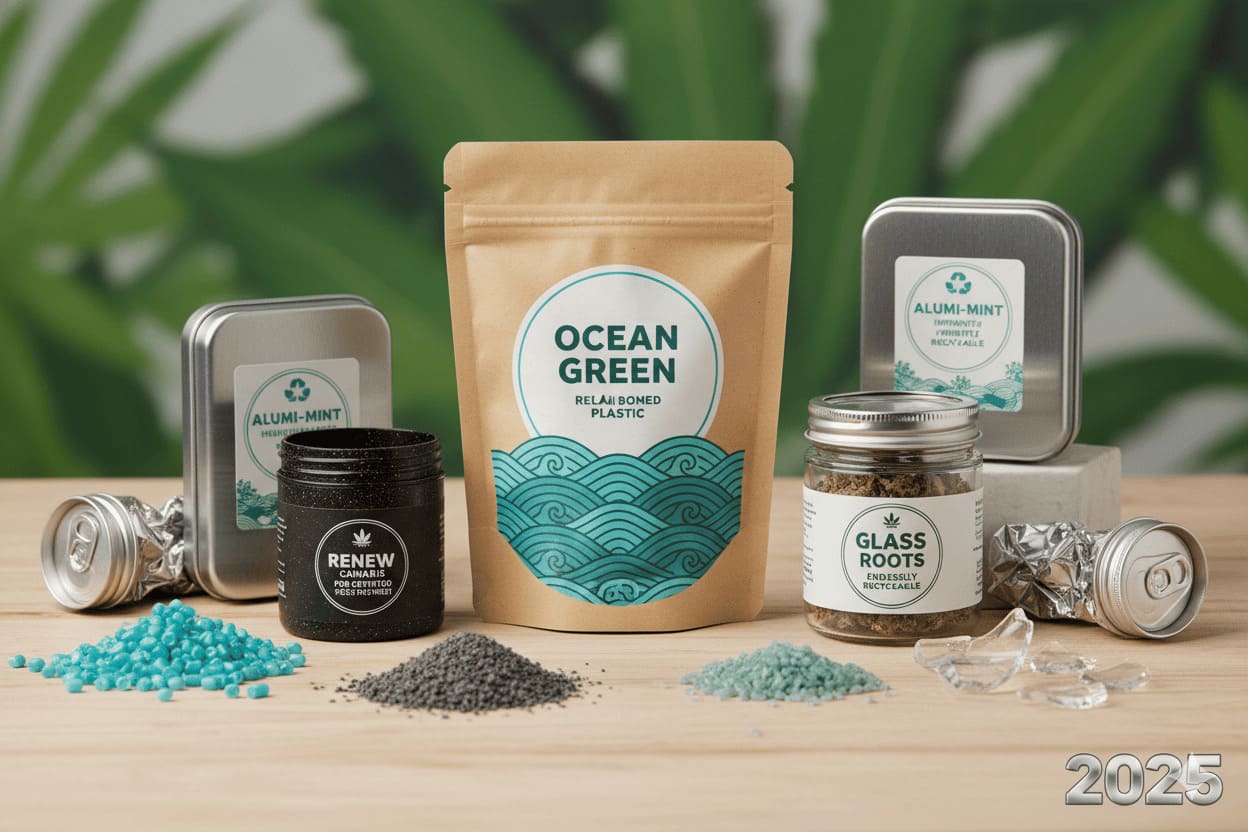
The most sustainable cannabis packaging materials2 balance compliance with eco-impact3. In 2025, this means focusing on recycled plastics4 like Ocean-Bound Plastic and Post-Consumer Resins (PCR)5, or leveraging highly recyclable materials like glass and aluminum where regulations and product formats allow.
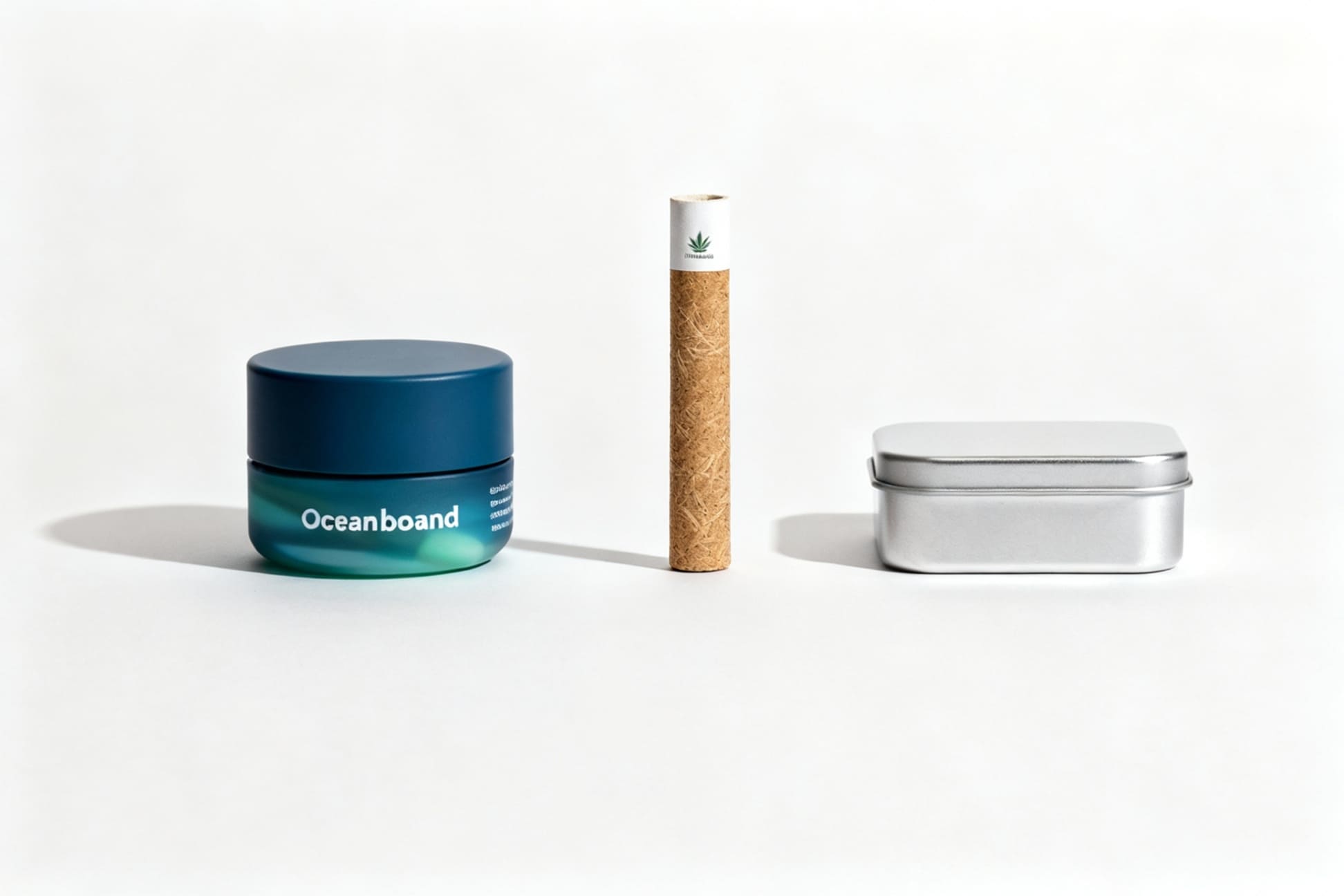
I remember the early days of legalization. A client came to me, incredibly excited about using a new, beautifully simple paperboard tube for their pre-rolls. It was 100% recyclable and looked fantastic. But my first question was, "How does it pass child-resistance testing?" They hadn't considered that. The design had no locking mechanism. We spent the next three months engineering a complex, multi-part plastic insert just to make the "simple" paper tube compliant. It ended up being less sustainable and more expensive than just starting with a compliant plastic design. That's the core challenge in this industry: sustainability can never come at the expense of safety and compliance.
Are Plant-Based Plastics Like Hemp a Real Option?
You've heard a lot of hype around hemp plastic6. It seems like the perfect story—cannabis packaged in cannabis. But you're skeptical about its performance, cost, and true environmental benefit.
Yes, they are a real and growing option, but with trade-offs. Hemp plastics and other biocomposites7 are great for rigid applications like pre-roll tubes, but are often more brittle and expensive than traditional plastic and may not be recyclable in mainstream systems.
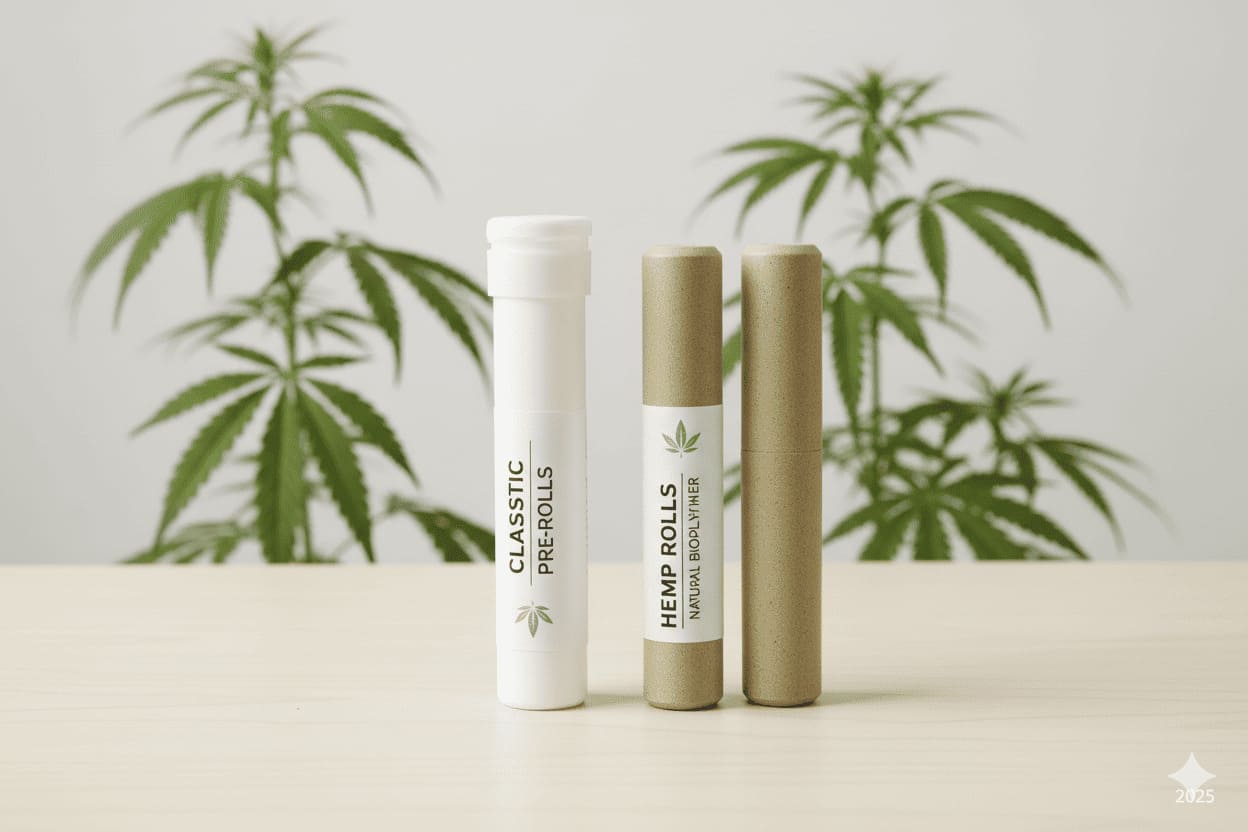
Plant-based plastics are fascinating materials to work with. Unlike uniform petroleum-based pellets, these biocomposites have natural variations. I once toured a facility that was injection molding with a hemp-filled polypropylene. You could actually see the tiny fibers of hemp suspended in the plastic. This gives the final part a unique, slightly textured look that screams "natural." However, that same natural component can be a headache for designers. The material properties aren't as consistent as virgin plastic. The shrinkage rate can vary more between batches, requiring more forgiving tolerances in your mold design. For a designer like Jacky, it's not a simple 1-to-1 swap. You have to design for the material, embracing its unique aesthetic while engineering around its physical limitations. It's a great choice for brands whose story is centered on natural, earthy values.
The Reality of Plant-Based Cannabis Packaging
These materials blend plant fibers with traditional or biodegradable plastics.
- Hemp Plastic: Typically a composite, meaning hemp fibers are mixed with a polymer like polypropylene (PP) or PLA. This reduces the amount of plastic used and gives the package a distinct look.
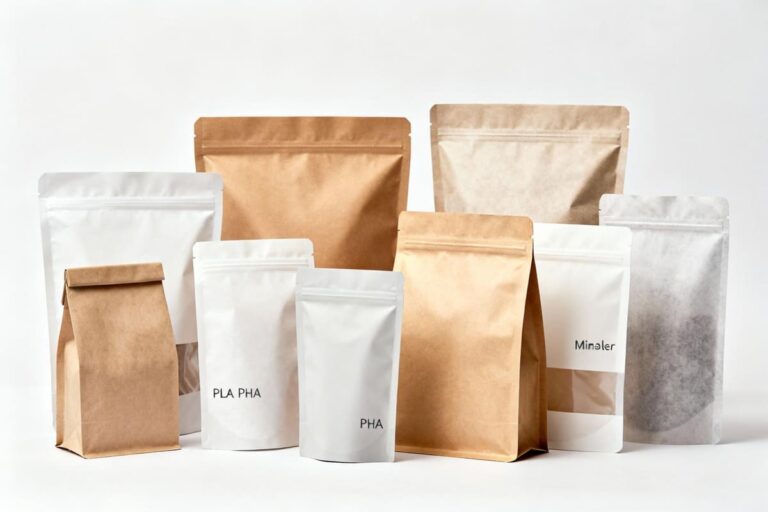
- PLA (Polylactic Acid)8: A bio-plastic derived from corn starch. It can be molded into clear containers or opaque jars. The big catch is that it's only compostable in industrial facilities, which are rare. If it ends up in a landfill or recycling bin, it's a contaminant.
- Performance vs. Sustainability: While they reduce reliance on fossil fuels, many of these materials can't be recycled. If a hemp/PP composite tube goes into the recycling stream, it contaminates the pure PP. So, the benefit is in using less virgin plastic upfront, not in end-of-life recovery.
| Material | Pros | Cons | Best For... |
|---|---|---|---|
| Hemp Composites | Reduces plastic use; unique look | Brittle; not easily recyclable; higher cost | Pre-roll tubes, small jars |
| PLA | Made from renewable resources | Industrially compostable only; contaminates recycling | Single-use containers in closed-loop systems |
| Recycled Plastics (PCR/OBP) | Diverts waste; robust supply chain | Color variation; potential for impurities | Mylar bags, pop-top tubes, jars |
What About Recycled Ocean-Bound Plastic9 and PCR?
You're trying to make the most responsible choice within the plastic ecosystem. You see terms like PCR and Ocean-Bound Plastic (OBP), but wonder if they're truly better or just a marketing spin.
These are currently the most practical and impactful sustainable options for compliant cannabis packaging. They utilize existing waste streams, have a mature supply chain, and perform almost identically to virgin plastic, making them an easy switch for existing molds.
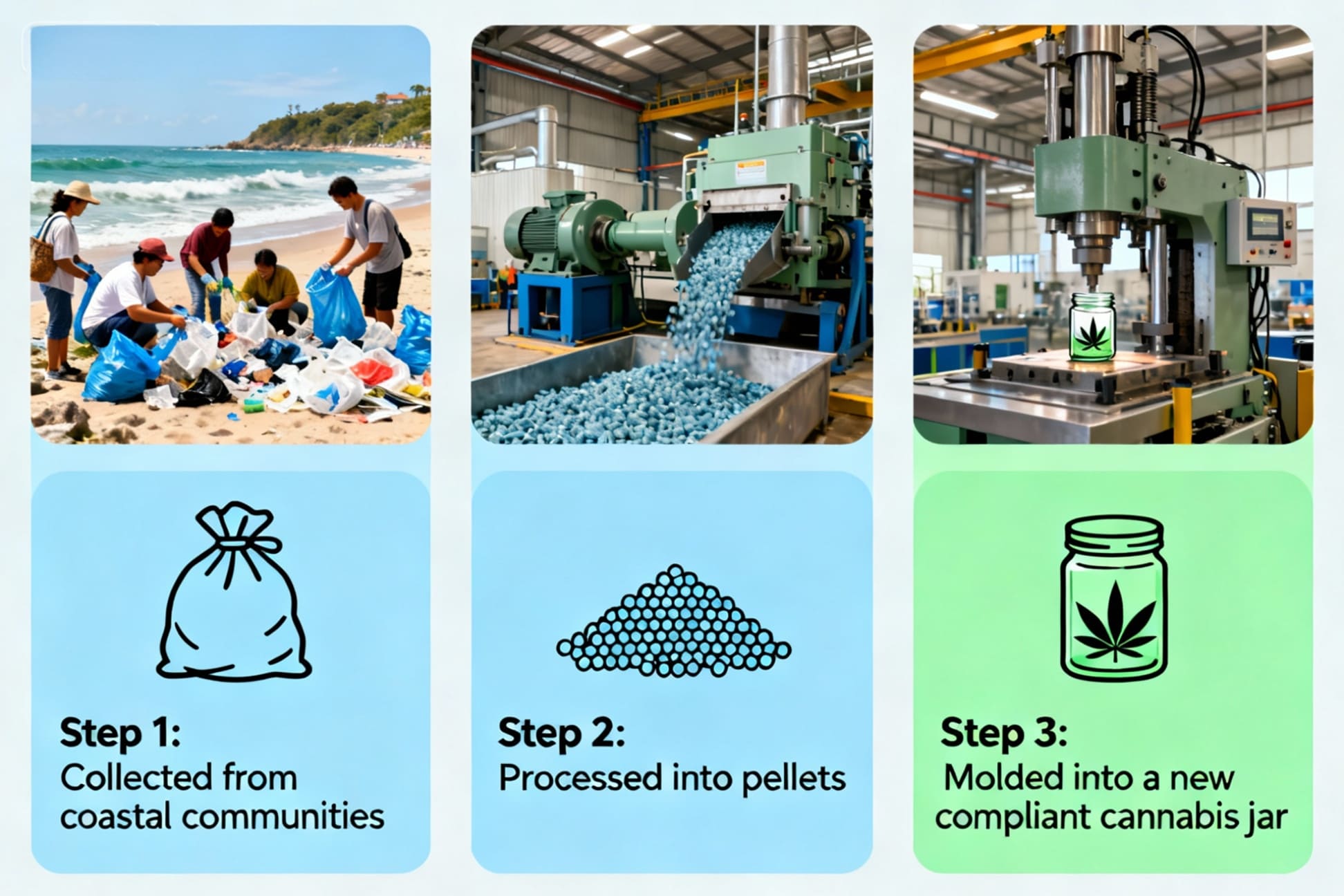
The shift to PCR (Post-Consumer Resin) in the cannabis space has been significant. Five years ago, if a client wanted to use PCR for a pop-top tube, it was a challenge. The supply was inconsistent, and the material was often a gloomy, indeterminate grey. You couldn't get a consistent white or black. Now, the supply chain is much more sophisticated. We work with suppliers who can provide high-quality, color-sorted PCR pellets. Ocean-Bound Plastic is the next evolution. I have a client who switched their entire line of black jars to 100% Ocean-Bound PP. The performance is identical, the cost is competitive, and the marketing story is powerful. It directly addresses consumer concern over ocean plastic pollution. For Jacky, this is a huge win. You can keep your existing CR-compliant mold, run a more sustainable material, and give your brand a story of tangible environmental action without redesigning a thing.
Why Recycled Plastics Are a Practical Choice
This approach focuses on fixing the "waste" problem by turning it into a resource.
- Ocean-Bound Plastic (OBP): This is post-consumer plastic waste collected within 50km of a coastline in communities that lack formal waste management. It's certified material that would have very likely ended up in the ocean. Using it cleans up the environment before the plastic is lost at sea.
- Post-Consumer Resin (PCR): This is recycled plastic from household or commercial waste, like milk jugs (HDPE) or soda bottles (PET). It's been collected, cleaned, and re-processed into pellets for manufacturing.
- Design & Compliance: The beauty of using OBP or PCR polypropylene (PP) or polyethylene (PE) is that they are the same base materials used for most child-resistant packaging. They meet FDA requirements for food contact and perform reliably in CR testing mechanisms that require specific material flexibility and strength, like pinch-and-turn or pop-top closures. You're not reinventing the wheel; you're just using better ingredients.
Conclusion
For cannabis packaging in 2025, true sustainability means pragmatism. The most effective path is using certified recycled materials like Ocean-Bound Plastic, which work within strict compliance rules and deliver a measurable impact.
Explore the importance of child-resistant laws and how they impact cannabis packaging design. ↩
Explore this link to discover innovative materials that balance compliance and eco-friendliness in cannabis packaging. ↩
Learn about the eco-impact of different packaging materials and their sustainability implications. ↩
Learn how recycled plastics can reduce environmental impact while maintaining compliance in cannabis packaging. ↩
Understand the advantages of using PCR in cannabis packaging and its role in sustainability. ↩
Learn about hemp plastic's unique properties and its suitability for cannabis packaging. ↩
Explore the role of biocomposites in sustainable packaging solutions and their environmental impact. ↩
Find out how PLA can be used in cannabis packaging and its compostability challenges. ↩
Find out how Ocean-Bound Plastic helps clean the environment and serves as a sustainable packaging option. ↩