What Are the Most Common Types of Packaging Boxes and Their Uses?
You're trying to choose a box for your new product, but the options are overwhelming. You're worried about picking one that's too expensive, doesn't offer enough protection, or fails to represent your brand's quality.
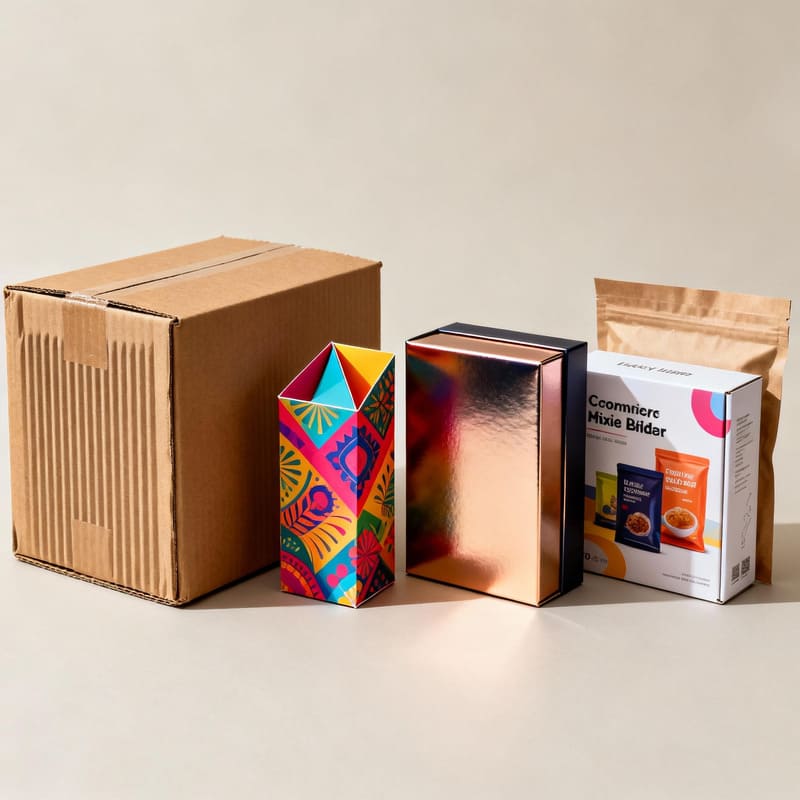
The most common box types are corrugated boxes1 for shipping, folding cartons2 for retail shelves3, rigid boxes4 for luxury items, and mailer boxes5 for e-commerce. Each is designed for a specific purpose, balancing cost, protection, and presentation.

I once worked with a startup selling high-end leather wallets. To save money, they shipped their beautiful product in a simple folding carton, the kind you’d see for a deck of cards. The result was a disaster. The cartons were crushed in transit, the wallets were scuffed, and customers were angry. They had chosen a retail box for a shipping job. It was a costly mistake that taught them a fundamental lesson: the box is not just a container; it's a critical part of your product's journey and its first impression. Picking the right type of box from the start is non-negotiable.
When Should You Use Corrugated Boxes for Your Products?
You need to ship your products, maybe in bulk or directly to customers. You're naturally concerned about items getting crushed or damaged during the rough-and-tumble journey of modern logistics.
Use corrugated boxes for almost any shipping application6. Their unique fluted construction provides excellent cushioning and strength-to-weight ratio, making them the global standard for protecting goods in transit.
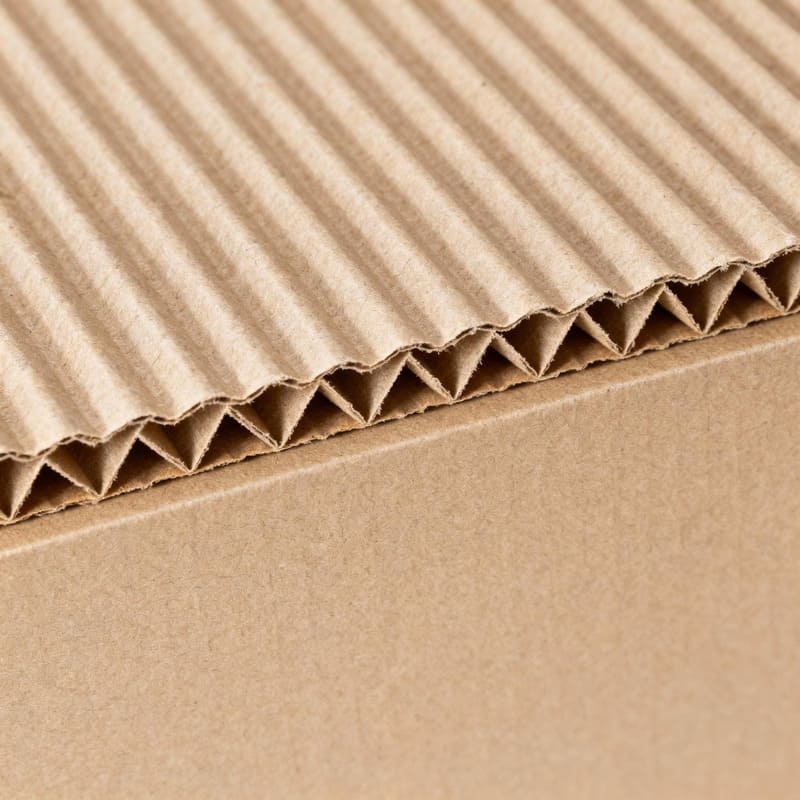
This is the classic "brown cardboard box" that powers global commerce, and its brilliance is in its simple structure. It's not just thick paper; it’s an engineered sandwich. Two flat sheets of paper, called linerboards, encase a wavy, zig-zag layer of paper called the flute. This fluted layer creates pockets of air that act as a cushion, absorbing impacts and resisting pressure. For a designer like Jacky, specifying the right corrugated box means understanding two key things: the flute size7 and the board strength. Different flute profiles offer different benefits. For example, C-Flute is a great all-rounder for shipping boxes, while E-Flute is much thinner and provides a smoother surface for high-quality printing.
Common Corrugated Flute Profiles
| Flute Type | Thickness (Approx.) | Characteristics & Common Uses |
|---|---|---|
| C-Flute8 | 4 mm | The most common standard for shipping boxes. Good all-around cushioning and stacking strength. |
| B-Flute9 | 3 mm | Good puncture resistance and a flatter surface for printing. Often used for inner packaging and displays. |
| E-Flute10 | 1.5 mm | Very thin, allowing for high-quality printing and custom shapes. Perfect for printed mailer boxes. |
| BC-Flute11 | 7 mm | A double-wall combination for heavy-duty items, offering superior stacking strength and protection. |
Choosing correctly ensures your product arrives safely without overspending on unnecessary weight or bulk.
Are Folding Cartons the Right Choice for Your Retail Shelves?
Your product will be sold in a physical store. You're worried it will blend in with the competition and fail to grab a shopper's attention in the crucial three seconds they spend looking at a shelf.
Yes, folding cartons are the ideal choice for retail. They are lightweight, inexpensive at high volumes, and offer a premium printing surface12 that effectively turns your packaging into an in-store billboard.
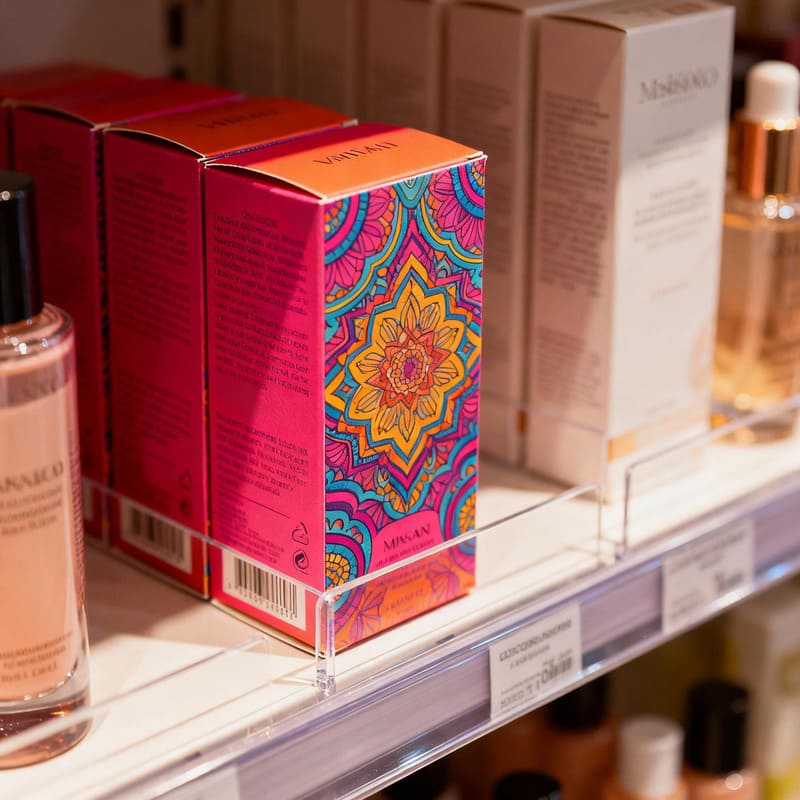
A folding carton is what you picture when you think of a cereal box, a toothpaste box, or a perfume box. They are made from a single layer of paperboard that is printed, die-cut into a flat shape, and then folded and glued into its final form. Unlike corrugated boxes, their primary job isn't heavy-duty protection; it's all about presentation. The smooth surface of the paperboard is a perfect canvas for high-resolution graphics, vibrant colors, and special finishes. This is where a brand can truly shine on a crowded shelf. For a designer, the possibilities are vast. You can add finishes like gloss or matte varnishes, foil stamping to create metallic effects, or embossing to add a physical texture. These details elevate the perceived value of the product inside before the customer has even touched it. Folding cartons are shipped flat to the manufacturing facility, saving huge amounts of space and cost, and are then quickly assembled on an automated line.
Should You Invest in Rigid Boxes for a Premium Unboxing Experience?
You have a high-value product like electronics, jewelry, or luxury cosmetics. You believe the "unboxing experience13" itself is a key part of your brand's story and customer satisfaction.
Absolutely. Rigid boxes are the ultimate choice for luxury products14. They don't collapse, provide excellent protection, and create a significant sense of weight, quality, and value the moment a customer holds them.

Think of the box your iPhone comes in. That’s a rigid box. Also called a set-up box, it’s made from thick, condensed paperboard (like chipboard) that is then wrapped with a decorative paper or fabric. Unlike folding cartons, they are delivered pre-assembled and do not collapse. This construction gives them immense structural integrity and a premium, heavy feel. Their cost is significantly higher than other box types, so they are reserved for products where perceived value is paramount. I worked with a chocolatier who switched from a folding carton to a two-piece rigid box with a magnetic closure. Their sales increased by 40%. Customers weren't just buying chocolate; they were buying a gift experience15. The satisfying "thump" of the magnetic closure and the sturdiness of the box instantly communicated luxury. For high-end brands, the unboxing experience is the first physical interaction with the customer, and a rigid box makes that interaction memorable and shareable.
Why Are Mailer Boxes Dominating E-Commerce Packaging?
You're running an online store or a subscription service. You need a box that can survive shipping but also looks great when the customer opens it at home, without complicated tape or wrapping.
Mailer boxes are dominating e-commerce because they perfectly combine the strength of a corrugated box with the presentation-focused design of a gift box. They are self-locking, durable, and offer a fantastic "unboxing" canvas.

Mailer boxes are my top recommendation for most direct-to-consumer brands16. Structurally, they are a clever type of die-cut corrugated box, usually made from a thinner E-flute board. Their design is what makes them special. They are cut from a single piece of board and designed to be folded and locked together using tabs and slots, often without needing any tape to assemble them. This creates double-layered side walls, making them remarkably strong and resistant to crushing during transit. But their real power is in the presentation. When a customer opens the lid, it feels like opening a treasure chest. The interior offers a wide, clean surface perfect for printing a thank-you message, instructions, or brand graphics, creating a delightful and branded moment right on their kitchen table. This blend of durability and customer experience17 is why they've become the go-to solution for subscription boxes18, influencer kits, and any e-commerce brand that cares about making a great first impression.
How Do You Choose the Right Box Type for Your Needs?
You now know the different types, but you're still unsure how to make the final decision. You need a simple way to connect your specific product needs to the perfect box solution.
Choosing the right box depends on your product's fragility, your shipping method, your budget, and the customer experience you want to create. Match these factors to the strengths of each box type for the best result.
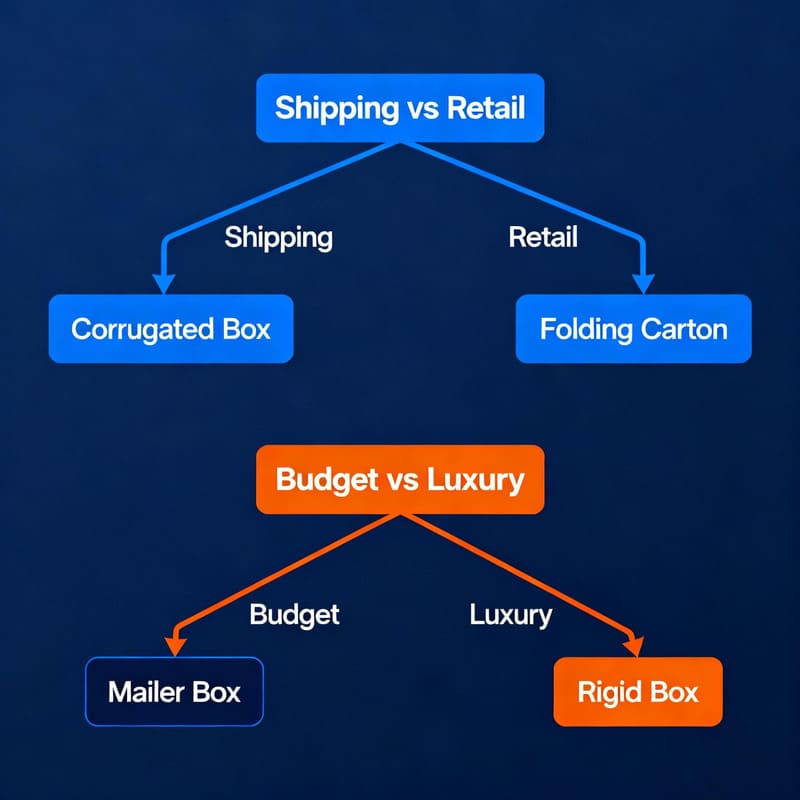
Let's break it down into a simple decision-making process. First, ask yourself: is the box's primary job protection during shipping or attraction on a retail shelf? If it's shipping, you start with corrugated. If it's retail, folding cartons are your baseline. Next, consider your brand's positioning. Are you a budget-friendly brand or a premium, luxury brand? For luxury, the higher cost of a rigid box is a worthwhile investment in the customer experience. For e-commerce, where you need both shipping strength and a great unboxing moment, the mailer box is almost always the right answer. Finally, look at your volume. Folding cartons become very inexpensive at high quantities, while the setup costs for rigid boxes make them more suitable for high-value products.
| Factor | Corrugated Box | Folding Carton | Rigid Box | Mailer Box |
|---|---|---|---|---|
| Primary Use | Shipping & Logistics | Retail Display | Luxury & Gifting | E-commerce Shipping |
| Protection Level | Very High | Low | High | High |
| Cost | Low | Very Low (at scale) | High | Medium |
| "Unboxing" Experience | Basic / Utilitarian | Standard | Premium / Memorable | Excellent / Branded |
By analyzing your needs through this lens, you can confidently select the box that will protect your product, represent your brand, and delight your customer.
Conclusion
Choosing the right box is crucial. Use corrugated for shipping, folding cartons for retail, rigid boxes for luxury, and mailers for e-commerce to ensure your product is protected and well-represented.
Explore the advantages of corrugated boxes, including their strength and cushioning properties, essential for safe shipping. ↩
Learn how folding cartons can transform your product's shelf appeal and attract more customers. ↩
Explore the importance of packaging design in attracting customers on retail shelves. ↩
Discover why rigid boxes are the preferred choice for luxury items, enhancing perceived value and customer experience. ↩
Find out how mailer boxes combine durability and aesthetics, making them perfect for online shopping. ↩
Understand the key factors in selecting the right shipping boxes to ensure product safety during transit. ↩
Explore how different flute sizes impact the strength and cushioning of corrugated boxes. ↩
Learn about C-Flute's versatility and why it's commonly used for shipping applications. ↩
Discover the benefits of B-Flute, especially for inner packaging and displays. ↩
Find out how E-Flute's thin profile enhances the quality of printed packaging. ↩
Learn about BC-Flute's heavy-duty capabilities and its ideal applications. ↩
Understand how a premium printing surface can elevate your product's market presence. ↩
Discover how a memorable unboxing experience can enhance customer loyalty and brand perception. ↩
Explore the best packaging solutions that convey luxury and quality for high-end products. ↩
Learn how thoughtful packaging can enhance the gifting experience and customer satisfaction. ↩
Find out effective packaging strategies that resonate with direct-to-consumer audiences. ↩
Explore the critical role packaging plays in shaping customer perceptions and experiences. ↩
Discover how to create engaging and functional packaging for subscription box services. ↩