
Small Business Packaging: What Are the Most Cost-Effective Solutions?
As a small business owner, you're wearing all the hats. You've perfected your product, but now you're staring at a huge, unexpected expense: packaging. The quotes for custom boxes1 are staggering, cutting right into your thin profit margins.
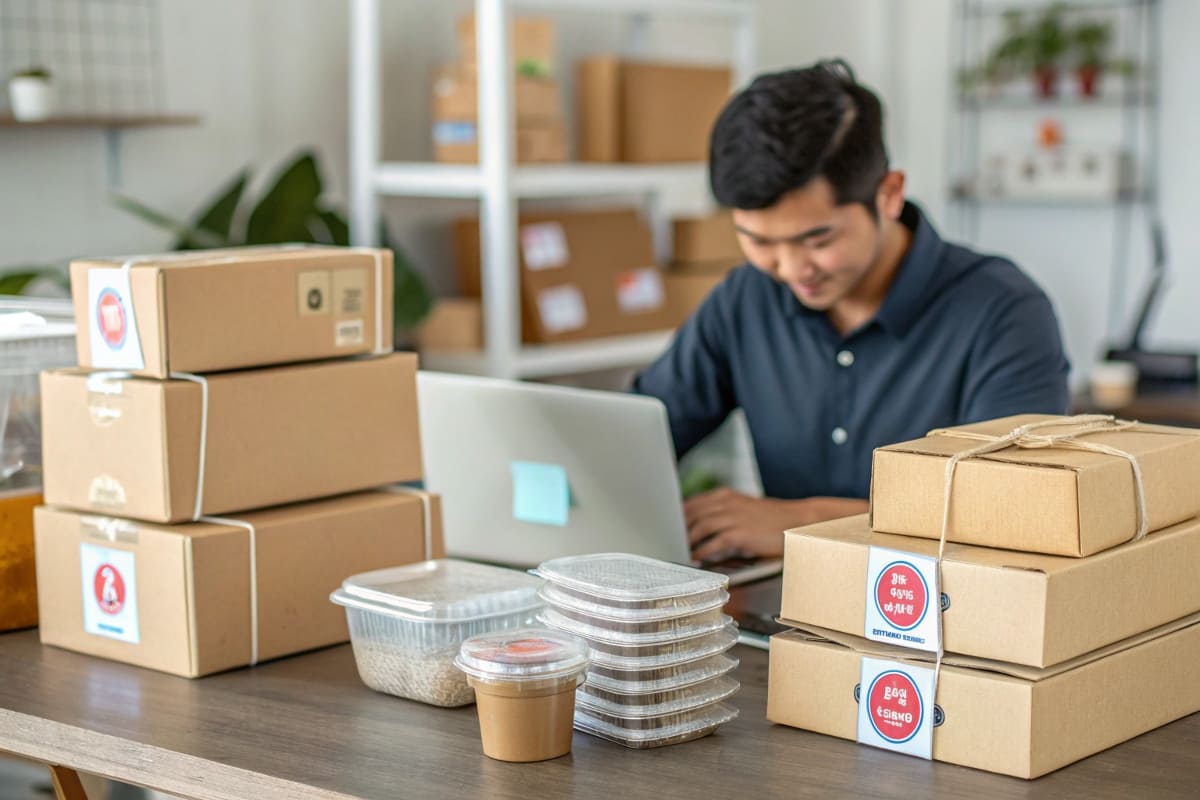
The most cost-effective solutions2 are stock packaging3 (like standard-sized mailer boxes4 and pouches) customized with low-cost branding like stickers or stamps, and a relentless focus on "right-sizing" your packaging to minimize material and shipping costs5.
<sup id=](https://whatapackaging.com/wp-content/uploads/2025/10/provide-an-illustration-for-the-following-text-a-10.jpg) 6, branded stickers, and branded tape" title="Cost-Effective Packaging Solutions for Small Businesses" />
6, branded stickers, and branded tape" title="Cost-Effective Packaging Solutions for Small Businesses" />
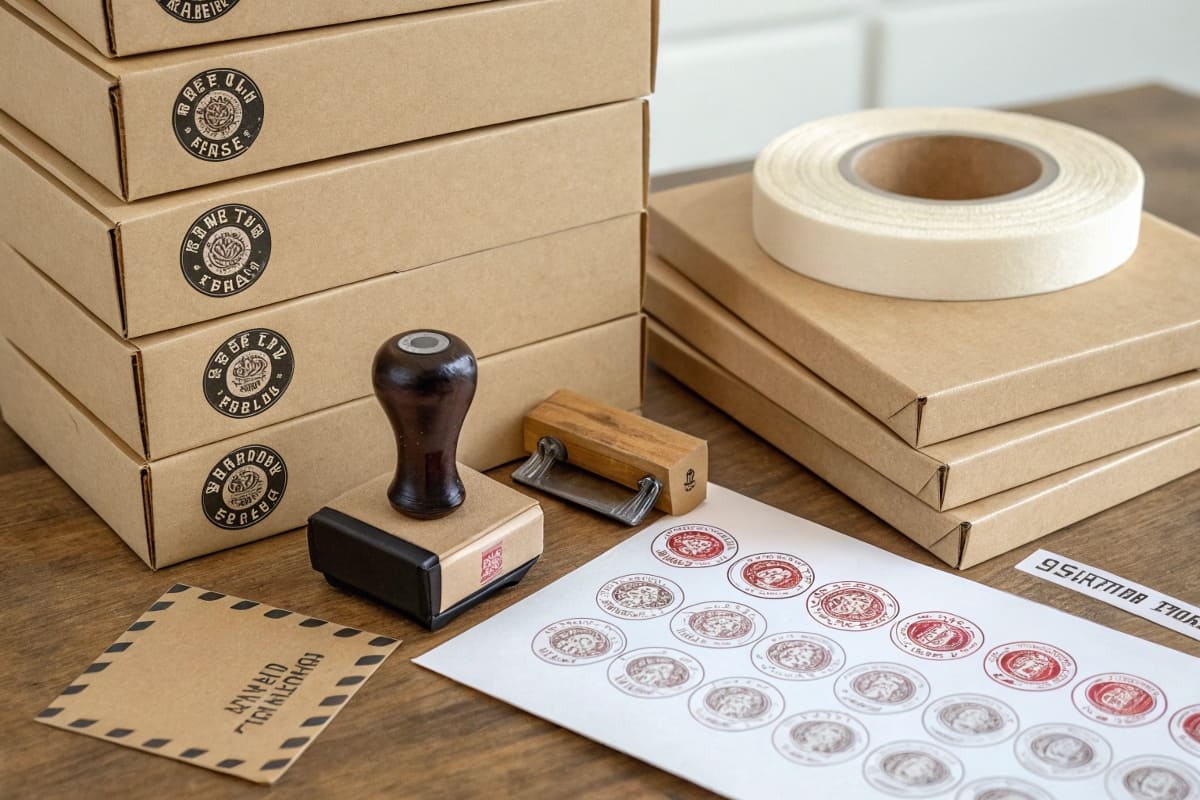
When I started my own trading company, cash flow was a constant worry. I couldn't afford a minimum order of 1,000 custom-printed boxes for every product. What I did instead was buy plain, stock-sized boxes in bulk and invest in a high-quality custom rubber stamp with my logo. Every single box that went out was hand-stamped. It was cheap, it was fast, and it added a personal, handcrafted touch that customers loved. This taught me a foundational lesson: for a small business, effective packaging isn't about spending the most money; it's about being the most creative with your resources.
How Can I Avoid High Costs from Custom-Sized Boxes?
You know a custom box would be perfect for your product, but the minimum order quantities (MOQs) are in the thousands. You don't have the cash or the warehouse space for that.
Utilize industry-standard "stock" packaging. Buy readily available, standard-sized mailer boxes, pouches, or containers at a low per-unit cost with no minimums. Then, create your own custom fit using affordable inserts like shredded paper7 or tissue.
I've seen so many startups get stuck on this point. They spend weeks trying to find a supplier who will make them 200 custom boxes, and the price is always astronomical. The smarter approach is to work with the system, not against it. Find a stock box that is slightly larger than your product. Uline, Paper Mart, or your local packaging supplier will have dozens of options available off the shelf. Then, the magic happens with the void fill8. Instead of generic bubble wrap, use crinkle-cut paper in your brand's color. This not only protects the product but also adds a huge visual impact when the customer opens the box. The box becomes a vessel, and the colored fill becomes part of the premium unboxing experience, all without the cost of a custom box.
The "Stock and Adapt" Strategy
This approach gives you a professional look while keeping you agile and your costs low.
- Audit Your Products: Measure your main products. Look for a small number of stock box sizes that can accommodate most of what you sell. Standardizing on 2-3 box sizes allows you to buy in slightly larger quantities for a better price.
- Invest in Inserts: Inserts are your secret weapon for making a stock box feel custom. You can use tissue paper, shredded paper, or even simple folded cardboard inserts to hold your product securely in place.
- Embrace the Mailer Box: For DTC brands, the roll-end tuck-front (REFT) mailer is king. It's sturdy, presents well upon opening, and comes in a huge variety of standard sizes. It’s the perfect canvas for your branding.
What Are the Cheapest Ways to Add My Logo and Branding?
Stock boxes are affordable, but they're plain. You want your package to look like it came from your brand, not just any generic company. You need branding, but printing is expensive.
The most budget-friendly branding methods are custom stickers, rubber stamps, or branded packaging tape9. These offer a very low cost per application and can be ordered in small quantities, allowing you to turn any plain box into a branded experience10.
Stickers are a small business's best friend. I'll never forget a client who sold handmade candles. We got them beautiful black stock boxes, but they looked a bit stark. We designed a simple, elegant circular sticker with their logo in gold foil. They used it to seal the tissue paper inside the box. That one tiny, inexpensive touch completely elevated the entire experience. It went from a plain black box to a sophisticated, gift-like package. The cost was less than 10 cents per unit. Rubber stamps offer a similar benefit with a more rustic, hands-on feel. Branded tape is fantastic because it's both functional—it seals the box—and a branding opportunity.
Your Branding Toolkit on a Budget
Combine these low-cost tools for a professional, layered look.
- Custom Stickers: Incredibly versatile. Use them on the outside of the box, to seal tissue paper, or directly on your product. You can order as few as 50 from many online printers.
- Rubber Stamps: The ultimate low-tech solution. A one-time purchase of a stamp and an ink pad can brand thousands of boxes. It adds a charming, artisanal quality that works perfectly for many small brands.
- Branded Tape: This is a slightly higher investment but offers a big impact. When you use custom-printed tape to seal your outer shipping box, your brand is visible throughout the entire shipping journey.
| Method | Upfront Cost | Per-Unit Cost | Flexibility | Best For |
|---|---|---|---|---|
| Stickers | Very Low | Very Low | High | Quick branding, sealing tissue, promotions. |
| Stamps | Low | Extremely Low | High | Rustic/artisanal look, interior branding. |
| Branded Tape | Medium | Low | Medium | External box sealing, high-visibility branding. |
| Custom Boxes | High | Medium-High | Low | Established businesses with high volume. |
How Can I Reduce My Shipping Costs Through Packaging?
You've found affordable boxes and branding, but shipping costs are eating you alive. You suspect your packaging might be part of the problem, making every order more expensive to send.
Reduce shipping costs by minimizing package size and weight. Use "right-sized" packaging that fits your product snugly to avoid dimensional weight11 charges, and choose lightweight materials like mailer boxes over heavy rigid boxes whenever possible.
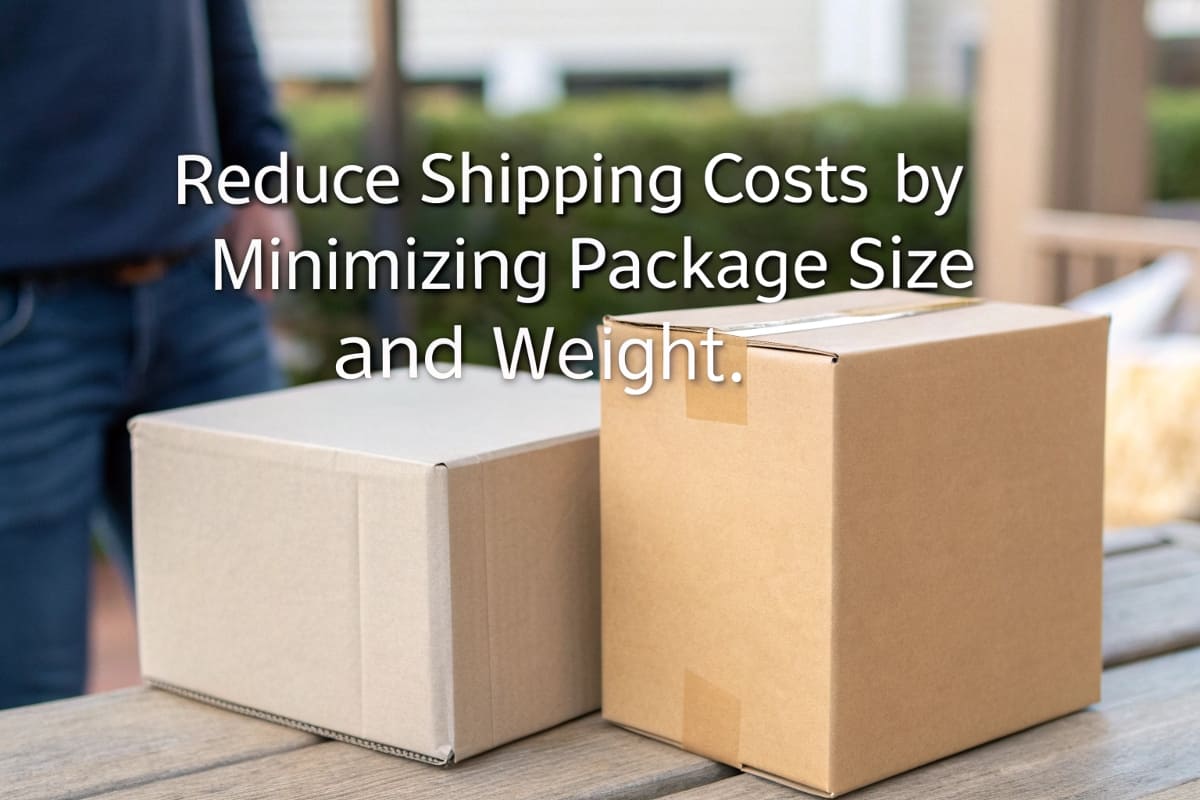
This is the hidden killer of profits for small e-commerce businesses. All major carriers (like USPS, FedEx, and UPS) use a pricing method called "dimensional weight" or DIM weight. They look at the size of your box, not just its actual weight, and charge you for whichever is greater. I once worked with a business selling lightweight supplements. They were shipping small bottles in medium-sized boxes filled with packing peanuts. By helping them source a tiny, custom-fit box, we cut their shipping cost on every single order by nearly 40%. The savings on shipping far outweighed the slightly higher cost of the smaller box. As a business owner, you must think of your box as a direct factor in your shipping bill.
A Quick Guide to Shipping-Smart Packaging
Every millimeter and gram you save adds up to real dollars.
- Know Your DIM Weight: Understand your carrier's formula (it's usually Length x Width x Height / Divisor). Design or choose packaging that stays below key price thresholds.
- Switch to Poly Mailers: If your product isn't fragile (like clothing, tea, or soft goods), use a lightweight poly mailer instead of a box. The savings in weight and space are enormous. You can still create a nice experience with branded tissue paper inside.
- Audit Your Void Fill: Air pillows and bubble wrap are light, but they often require you to use a larger box. Materials like tissue paper or shredded fill allow for a snugger fit in a smaller overall package.
Conclusion
Cost-effective packaging for small businesses means being resourceful. Focus on smart, adaptable stock solutions, low-cost branding, and minimizing shipping costs to protect your profits and delight your customers.
Understand the scenarios where custom boxes are worth the investment. ↩
Discover innovative solutions that can help you save money on packaging. ↩
Explore how stock packaging can save costs while providing flexibility for your business. ↩
Learn why standard sizes can be more economical for small businesses. ↩
Explore effective methods to minimize shipping expenses. ↩
Find out how a rubber stamp can add a personal touch to your packaging. ↩
Explore how shredded paper can be both cost-effective and visually appealing. ↩
Understand the importance of void fill and how it enhances product protection. ↩
See how custom tape can turn your packaging into a marketing tool. ↩
Learn how to elevate customer experience with thoughtful packaging. ↩
Learn about DIM weight and how to optimize your packaging for savings. ↩