Protective Packaging for Fragile Goods: What Works Best?
You live with the constant fear of a customer opening a box to find a shattered product. These damages lead to costly returns, negative reviews, and a loss of customer trust.
The best protection comes from a complete "packaging system1." This involves using a strong outer box combined with the right internal cushioning and void fill2, all chosen specifically for your product's fragility, weight, and shape.

I've seen the aftermath of poor packaging decisions firsthand. From a pallet of shattered glass vases to a shipment of cracked electronic screens, the financial loss is painful. But the loss of brand reputation3 is even worse. The saddest part is, most of this damage is completely preventable. For a skilled designer like Jacky, selecting the right protective materials isn't just about picking something from a catalog; it's about engineering a solution that guarantees a safe journey for the product. Let's dig into the solutions that work in the real world.
Is Custom Foam the Ultimate Solution for High-Value Items?
Your product is a high-end electronic device worth thousands. Using flimsy bubble wrap4 feels like a huge risk, offering poor protection and creating a cheap unboxing experience.
Yes, for high-value, uniformly shaped items, custom-cut foam inserts5 offer the ultimate protection. Materials like PE or EVA provide superior shock absorption and a premium feel, holding the product so securely that it cannot move.
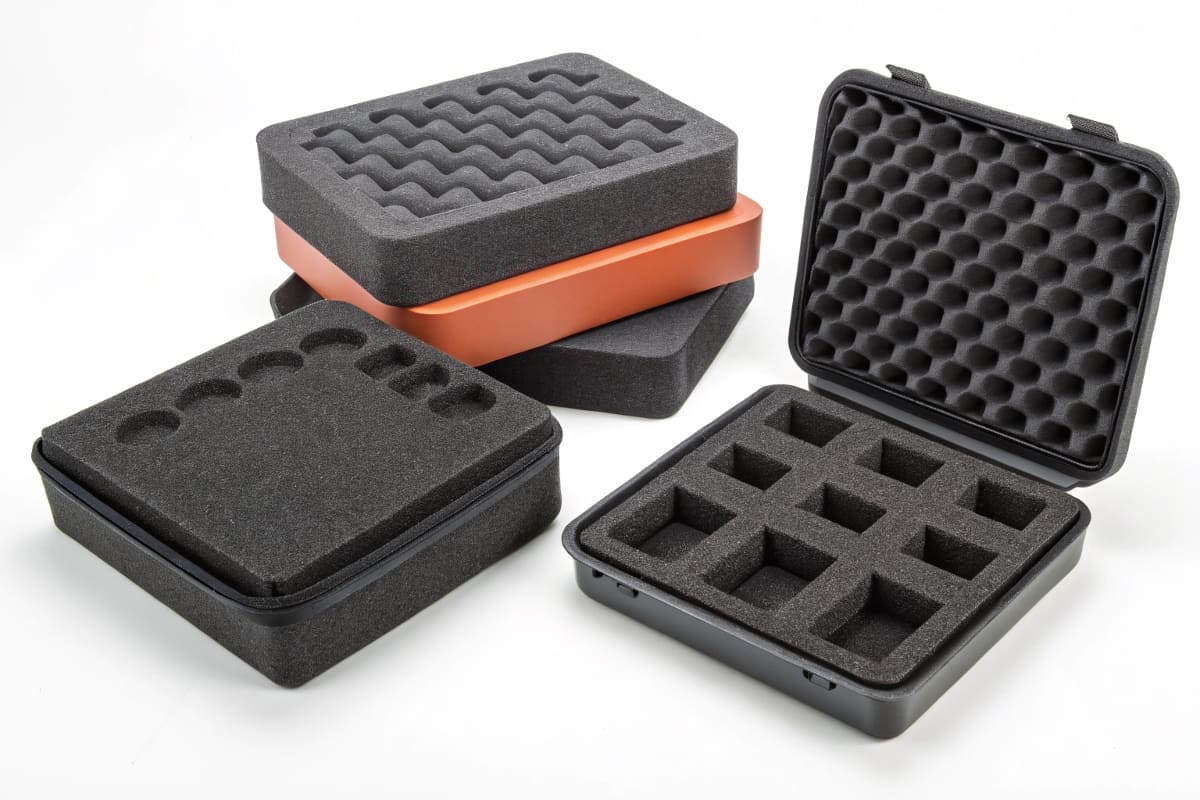
When a product's value is high, you can't afford to take chances. This is where engineered foam comes in. I remember working with a client who manufactured delicate medical instruments. In the beginning, they had a 5% damage rate using standard void fill2. We designed a custom Polyethylene (PE) foam insert for them. The foam was precisely cut to cradle the instrument, with specific densities to absorb shock at key points. Their damage rate dropped to zero. More than that, their customers commented on the professional and secure packaging, which increased their perception of the product's quality. This is the power of a custom solution. It's an investment that pays for itself by eliminating damage and elevating the brand experience.
Choosing the Right Foam for the Job
Not all foam is created equal. The type and density you choose are critical for performance. A designer needs to match the material to the product's specific needs.
- Polyethylene (PE) Foam6: This is a dense, closed-cell foam. It's rigid and excellent at absorbing major shocks and impacts. It's perfect for heavy, high-value items that need to be held firmly in place. It's not easily scratched and has a clean, industrial look.
- Polyurethane (PU) Foam7: This is a softer, open-cell foam, like the kind you'd find in a couch cushion. It's lighter and more flexible. It’s best for lighter, more delicate items that are sensitive to scratches and vibrations. It cradles the product gently.
- Ethylene-vinyl acetate (EVA) Foam8: This is the premium option. It's a very dense, smooth, and resilient foam rubber. It provides exceptional shock absorption and has a high-end feel, often used for luxury product presentations and case inserts.
| Foam Type | Key Characteristic | Best For... | Cost Level |
|---|---|---|---|
| PE Foam | Rigid & Strong | Heavy electronics, industrial parts | Medium |
| PU Foam | Soft & Conforming | Lighter items, sensitive surfaces | Low-Medium |
| EVA Foam | Dense & Premium | Luxury goods, presentation cases, tools | High |
Are Sustainable Options as Effective as Traditional Plastics?
Your customers are demanding eco-friendly packaging. But you worry that "green" alternatives won't properly protect your fragile ceramics, forcing you to choose between sustainability and safety.
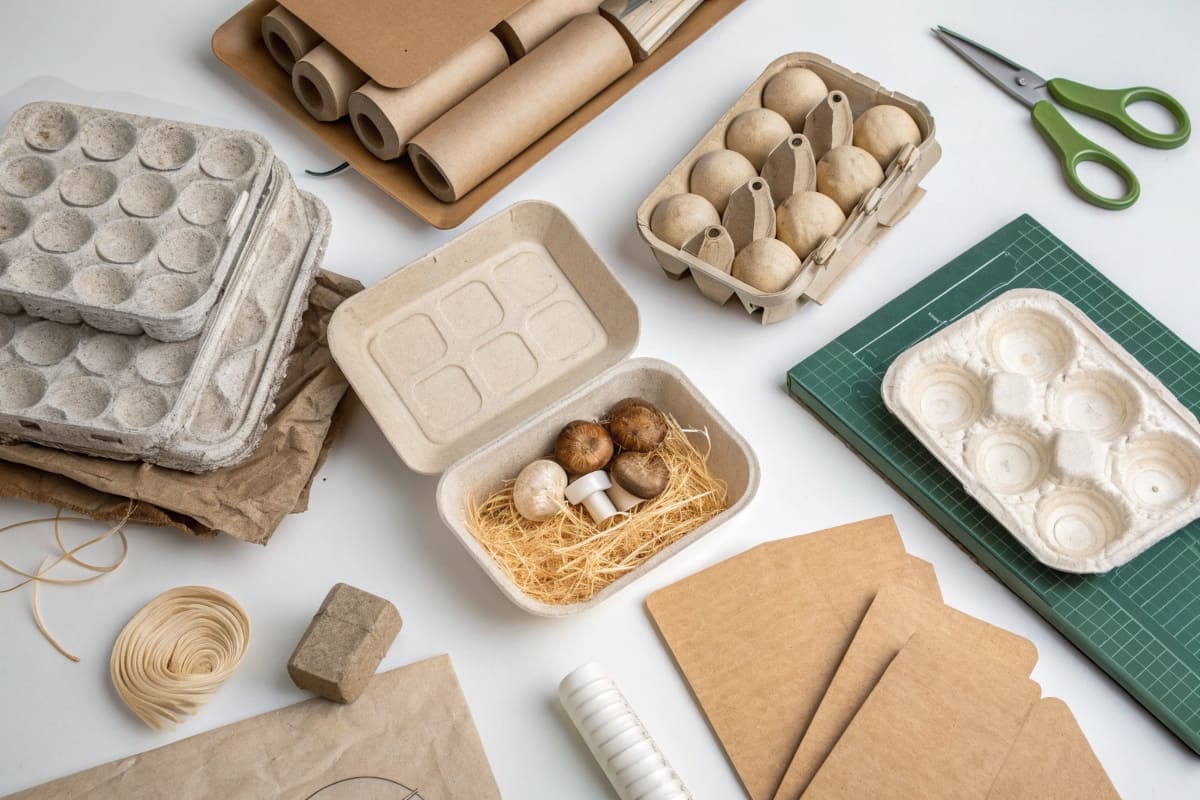
Yes, modern sustainable options are now highly effective. Custom-molded pulp, mushroom packaging, and advanced paper systems can be engineered to offer shock protection that is comparable to or even better than plastics for many applications.
<sup id=](https://whatapackaging.com/wp-content/uploads/2025/10/provide-an-illustration-for-the-following-text-ye-5.jpg) 9 clamshell insert" title="Sustainable Molded Pulp Packaging for Fragile Bottle" />
9 clamshell insert" title="Sustainable Molded Pulp Packaging for Fragile Bottle" />
For years, there was a trade-off. You could have strong protection (plastic) or you could be sustainable (paper), but you couldn't have both. That is no longer true. I've been amazed by the innovation in this space. I recently helped a boutique olive oil company switch from plastic bubble wrap4 to custom-molded pulp9 inserts for their glass bottles. Not only did the molded pulp hold the bottles more securely, but the unboxing experience felt more rustic and authentic to their brand. Their customers loved it, and they featured the sustainable packaging10 all over social media. It became a marketing asset. For Jacky, knowing these materials is no longer a niche skill; it's essential for any modern designer.
The New Generation of Green Protection
These materials are not just "greenwashed" paper; they are highly engineered solutions that offer real protection while telling a great brand story.
- Molded Pulp: Made from recycled paper or other natural fibers, molded pulp can be shaped into custom clamshells and end caps, just like foam. It provides excellent bracing and cushioning properties and is 100% recyclable and compostable.
- Mushroom® Packaging11: This is true innovation. It uses mycelium (the root structure of mushrooms) to grow custom-fit packaging in a mold. It's completely home-compostable and offers fantastic cushioning properties.
- Paper-Based Systems: These are replacing bubble wrap4 and air pillows12. Honeycomb paper wrap13 (like Geami) creates a protective web around items. Other machines create crinkled kraft paper pads that offer excellent block-and-brace and void-fill capabilities.
| Sustainable Option | Primary Use | Performance vs. Plastic Bubble Wrap |
|---|---|---|
| Molded Pulp | Bracing & Cushioning | Superior for holding-in-place (bracing) |
| Honeycomb Paper | Wrapping & Cushioning | Comparable for surface protection |
| Paper Void Fill | Filling Gaps | Superior for heavy items (less settling) |
When Should You Use Air Pillows and Bubble Wrap?
You need to ship a variety of items and need a fast, cheap way to fill empty space in a box. But just throwing in some bubble wrap feels unprofessional and often fails.
Air pillows are best for cost-effective void fill to prevent items from shifting in the box. Bubble wrap is best used for surface protection by wrapping individual, lightweight, and less-fragile items to guard against scratches and minor impacts.
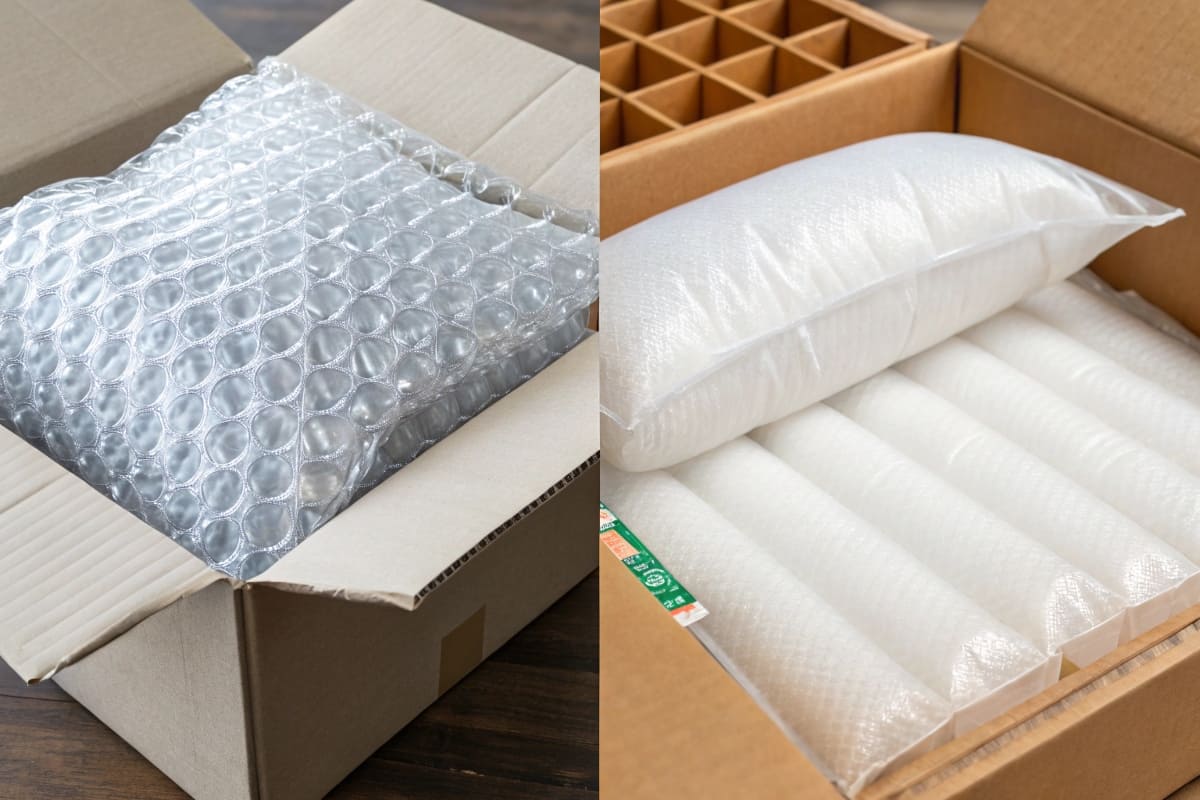
Air pillows and bubble wrap are probably the most common—and most misused—materials in packaging. I see warehouses full of them. Their effectiveness depends entirely on using them correctly. The biggest mistake is thinking they are a complete solution. They are components of a system. Air pillows are literally just bags of air; their only job is to fill empty space so the primary packaged item can't move. They offer very little cushioning. Bubble wrap's strength is in protecting surfaces from scratches and providing a minimal cushion. For a designer like Jacky, the key is to know their limits and to use them for their intended purpose, not as a lazy, one-size-fits-all solution.
A Framework for Using Common Inflatables
Understanding the difference between void fill, cushioning, and blocking is key to using these materials effectively.
- Void Fill (Use Air Pillows): The goal is simply to fill the empty space in a shipping box to prevent the contents from moving. If your primary product is already in its own sturdy box (like a shoebox), filling the surrounding space in the shipper with air pillows is a perfect, low-cost application.
- Cushioning & Surface Protection (Use Bubble Wrap): The goal is to absorb small impacts and prevent scratches. Bubble wrap should be wrapped directly around an item. It works best for items that are not extremely fragile or heavy, like books, picture frames, or hard plastic goods. Don't use it to fill a large void, as it will compress and offer little support.
| Material | Primary Function | When to Use It | When to Avoid It |
|---|---|---|---|
| Air Pillows | Void Fill | Filling large empty spaces in a box. | As primary cushioning for heavy or fragile items. |
| Bubble Wrap | Surface Protection & Cushioning | Wrapping individual items to prevent scratches. | For heavy items or filling large voids. |
Conclusion
The best protective packaging is a system. Match the right foam, sustainable material, or void fill to your product's specific needs to eliminate damage and enhance your brand's reputation.
Understanding a packaging system can help you choose the best protective solutions for your products. ↩
Explore the concept of void fill and its importance in preventing product movement. ↩
Learn how effective packaging can enhance your brand's image and customer loyalty. ↩
Learn the proper applications for bubble wrap to ensure effective protection. ↩
Explore how custom-cut foam inserts can provide superior protection for high-value items. ↩
Learn about PE Foam's properties and why it's ideal for heavy, high-value items. ↩
Discover the advantages of PU Foam for protecting lighter, delicate items. ↩
Find out why EVA Foam is favored for luxury goods and high-end presentations. ↩
Learn how custom-molded pulp can provide strong protection while being eco-friendly. ↩
Explore the advantages of eco-friendly packaging solutions for your business. ↩
Discover the innovative use of mycelium in creating sustainable packaging solutions. ↩
Understand the role of air pillows in void fill and how to use them correctly. ↩
Find out how Honeycomb paper wrap can replace traditional bubble wrap effectively. ↩