
Packaging Automation in 2025: Which Technologies Should You Watch?
Labor costs are rising and skilled workers are scarce. Your packaging line is struggling to keep up, risking delays and errors that hurt your bottom line and brand reputation.
In 2025, focus on AI-powered quality control1, accessible collaborative robots2 (cobots), and integrated IoT systems3. These key technologies will boost efficiency, cut costs, and improve flexibility4 on your packaging line, making it smarter and more resilient.
I've been in this industry for a long time, from the factory floor to running my own company. I’ve seen automation evolve from simple conveyors to what we have today. The change is faster than ever. For a designer like Jacky, understanding these shifts isn't just about curiosity; it's about job security and company growth. Staying competitive in 2025 means embracing automation that is not just faster, but smarter. Let's look at the specific technologies that will matter most in the coming year.
How Will AI and Machine Vision Revolutionize Your Quality Control?
You worry about tiny defects slipping past human inspectors on a fast-moving line. A single mistake in a print run or a misplaced label can lead to costly recalls5.
AI-powered machine vision systems6 go beyond simple pass/fail checks. They learn what a "good" package looks like, adapting to variations and catching subtle flaws that older systems would miss, drastically reducing false positives and improving accuracy.
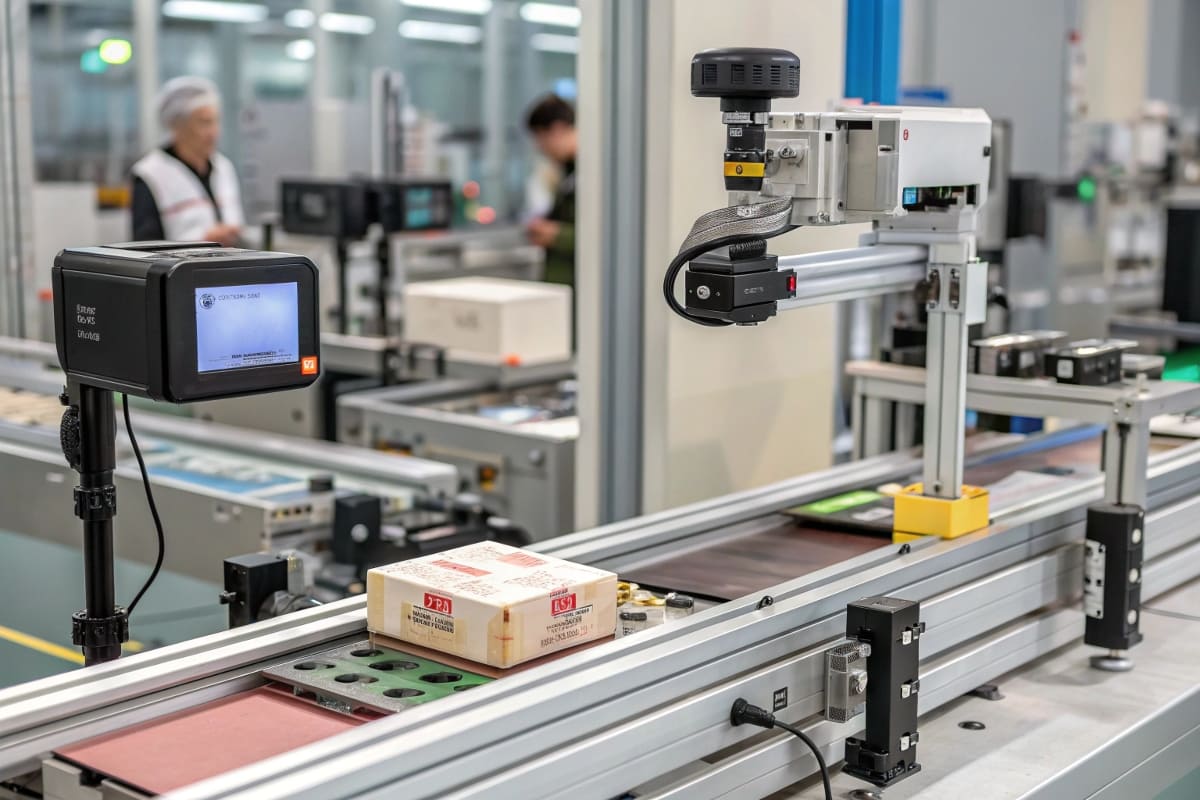
Traditional machine vision has been around for years, but what we're seeing in 2025 is the deep integration of Artificial Intelligence. I remember setting up early vision systems that were incredibly rigid. If the lighting changed slightly or a new, shinier material was used, the system would create a pile of "defective" products that were actually fine. It caused more problems than it solved. Today’s AI-powered systems are different. They use deep learning to understand context. This allows them to perform incredibly complex tasks that were once only possible with a human eye.
Moving Beyond Simple Inspection
The real power of AI is its ability to learn and predict. Instead of just flagging a bad seal, it can analyze data from the sealing machine to predict when a failure is likely to occur, enabling preventative maintenance.
- Self-Learning Algorithms: You can train these systems with thousands of images of "good" and "bad" packages. They learn to identify printing errors, label placement issues, fill level inaccuracies, and even subtle damage to the packaging material itself with incredible precision.
- Reduced False Positives: AI understands acceptable variations. For example, it can learn that a slight shift in a graphic element on a flexible pouch is okay, but a misprinted expiration date is a critical failure. This intelligence dramatically cuts down on wasted product.
- Data-Driven Insights: The system doesn't just say "no." It collects data on why things are failing. This feedback loop is pure gold for an operations team.
| AI Vision Application | 2025 Impact on Packaging Line | Benefit for Your Business |
|---|---|---|
| Print & Label Verification | Checks every single package for color accuracy, text, and codes. | Prevents recalls due to mislabeling or barcodes. |
| Seal Integrity Analysis | Uses thermal or visual imaging to detect microscopic leaks. | Extends product shelf life7 and ensures safety. |
| Assembly Verification | Confirms all components are present and correctly assembled. | Guarantees product quality and user experience. |
Are Collaborative Robots (Cobots) the Future of Your Packaging Line?
You need to automate repetitive tasks, but traditional industrial robots are expensive, require huge safety cages, and can't easily adapt to new product runs. This feels out of reach.
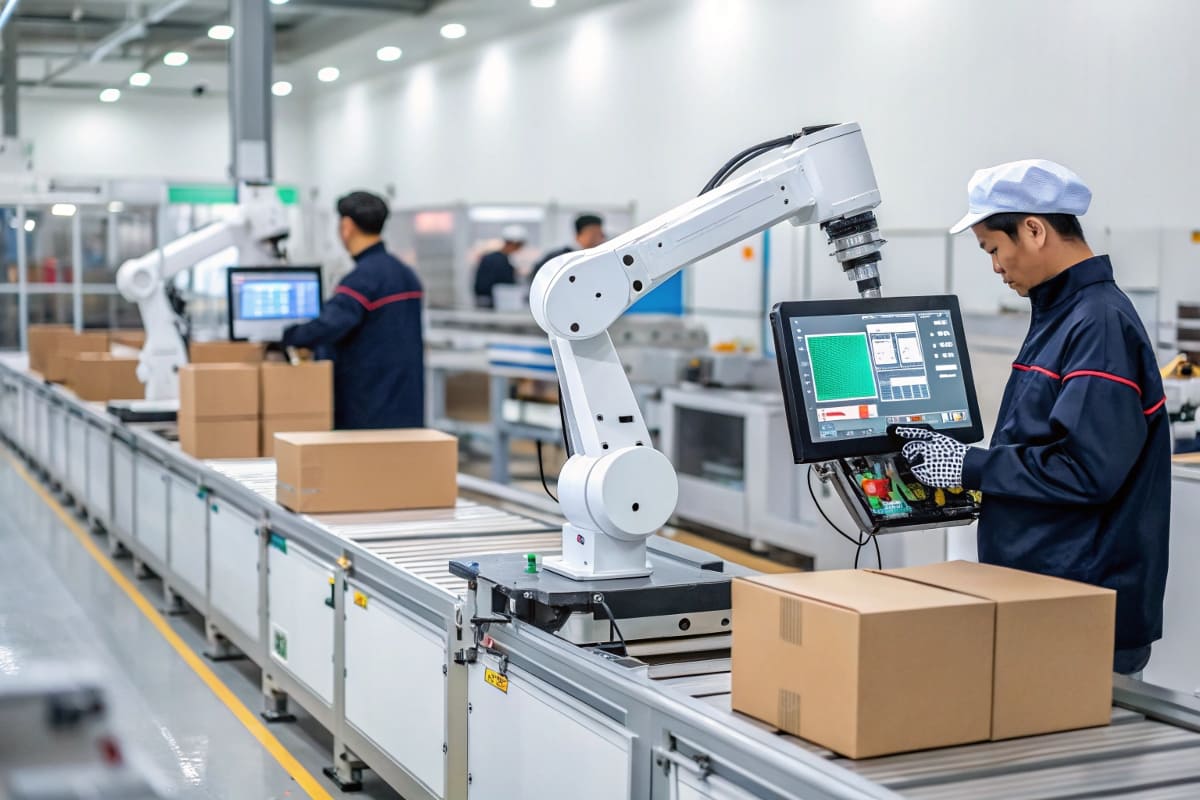
Yes, for many companies, cobots are the future. They are designed to work safely alongside humans without cages. They are more affordable, easier to program, and flexible enough to be moved and retrained for different tasks on the line.
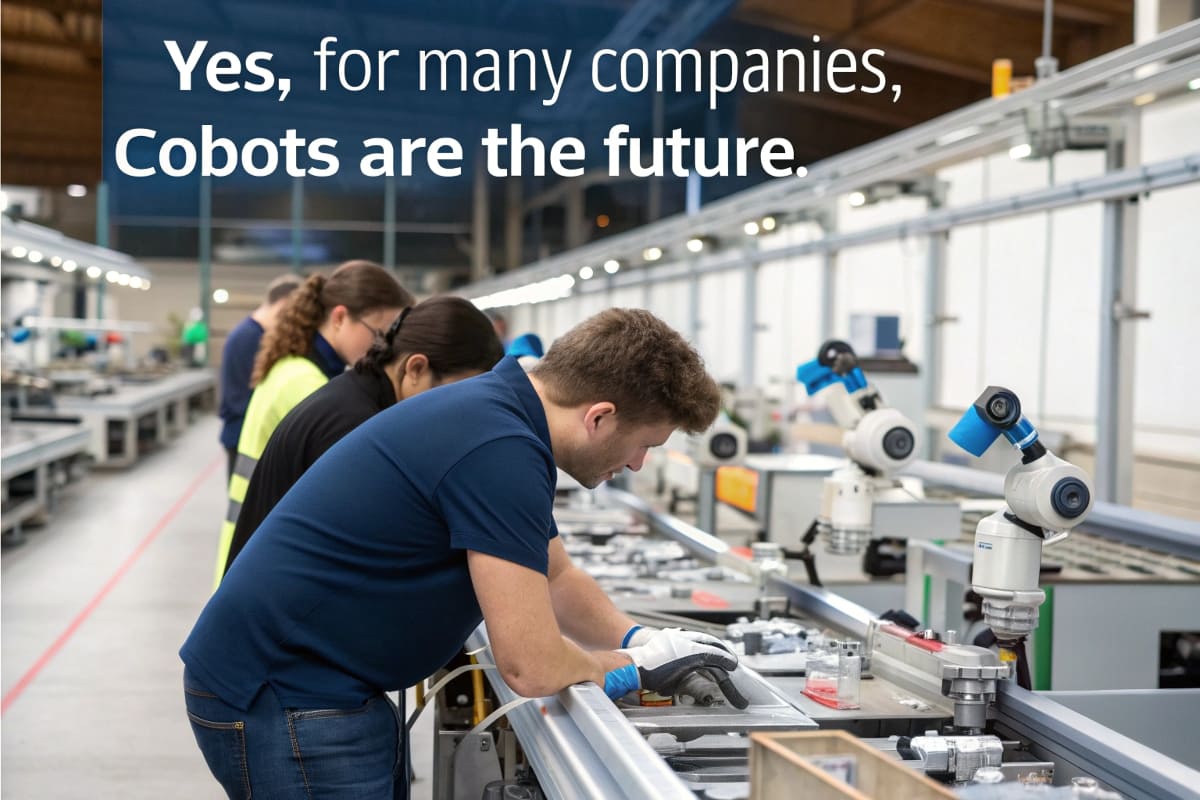
When I think about automation that's truly accessible for mid-sized manufacturers, I think of cobots. In the past, "robotics" meant a massive, caged arm doing one thing very fast. It was a million-dollar investment. Cobots have completely changed the game. I saw my first one in action a few years ago at a trade show, and what amazed me was its simplicity. An operator with no coding experience was "teaching" it a new task simply by guiding the arm through the motions. This flexibility4 is perfect for the modern packaging environment where product lines and formats are constantly changing.
Making Automation Accessible and Flexible
Cobots fill the gap between manual labor and full-scale automation. They aren't meant to replace workers entirely but to augment them, taking over the dull, repetitive, and strenuous jobs.
- Enhanced Safety: The defining feature of a cobot is its built-in safety sensors. If it bumps into a person or an obstacle, it stops immediately. This eliminates the need for bulky, expensive safety fencing and allows for a more open, collaborative factory floor.
- Rapid Deployment: A cobot can often be unboxed and programmed for a simple task like case packing or palletizing within a single day. This is a world away from the weeks or months it takes to integrate traditional robots.
- Scalability: You can start with one cobot for a specific bottleneck. As your needs grow, you can add more. This "pay-as-you-grow" model makes automation a much less intimidating investment.
| Common Cobot Task | How It Improves the Line | Key Advantage |
|---|---|---|
| Pick and Place | Moves products from a conveyor into primary packaging. | Frees up employees for more complex, valuable work. |
| Case Packing & Erecting | Automatically forms boxes and packs them with products. | Increases speed and consistency in end-of-line tasks. |
| Palletizing | Stacks finished cases onto pallets for shipping. | Reduces risk of worker injury from heavy lifting. |
Can Connected Systems and IoT Make Your Operations Unstoppable?
Your factory has machines from different vendors that don't talk to each other. You have no real-time visibility into your line's performance, making it impossible to spot inefficiencies.
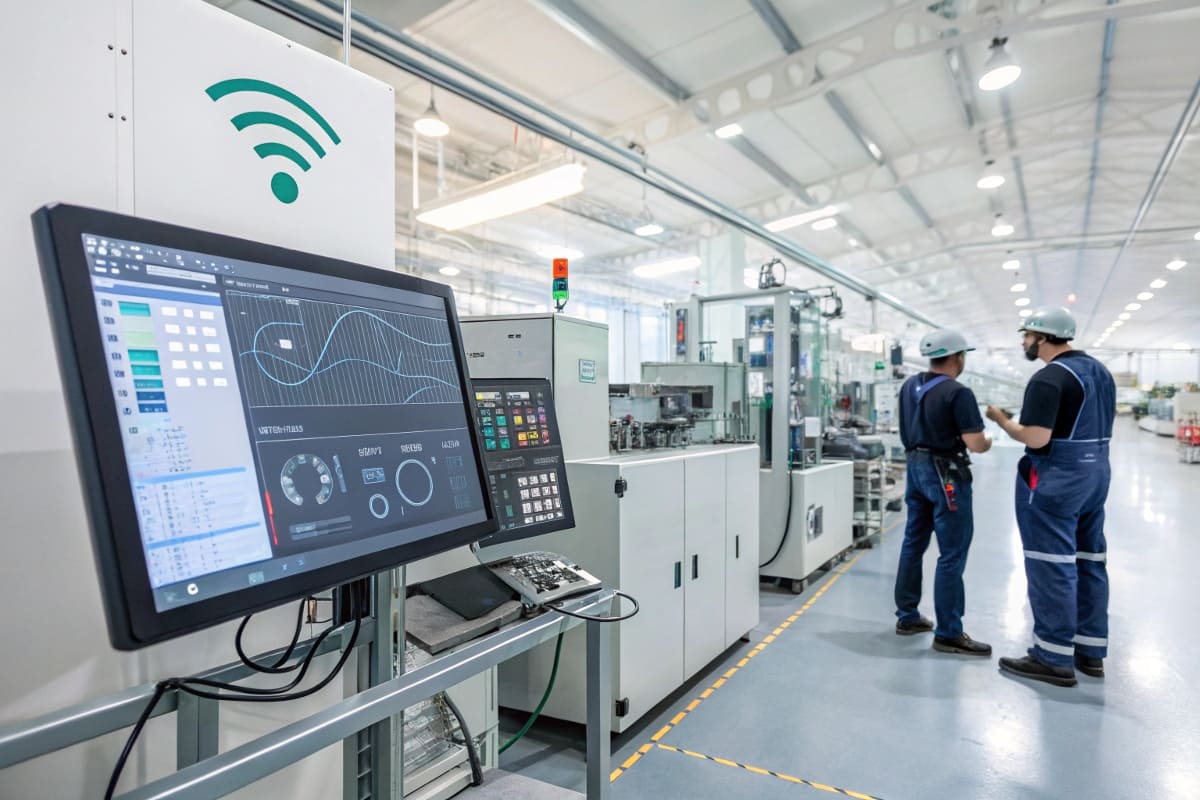
Yes, by connecting your machines using the Internet of Things (IoT), you can create a single, unified system. This gives you a live dashboard of your entire operation, enabling predictive maintenance8, automatic adjustments, and data-driven decisions to boost productivity.
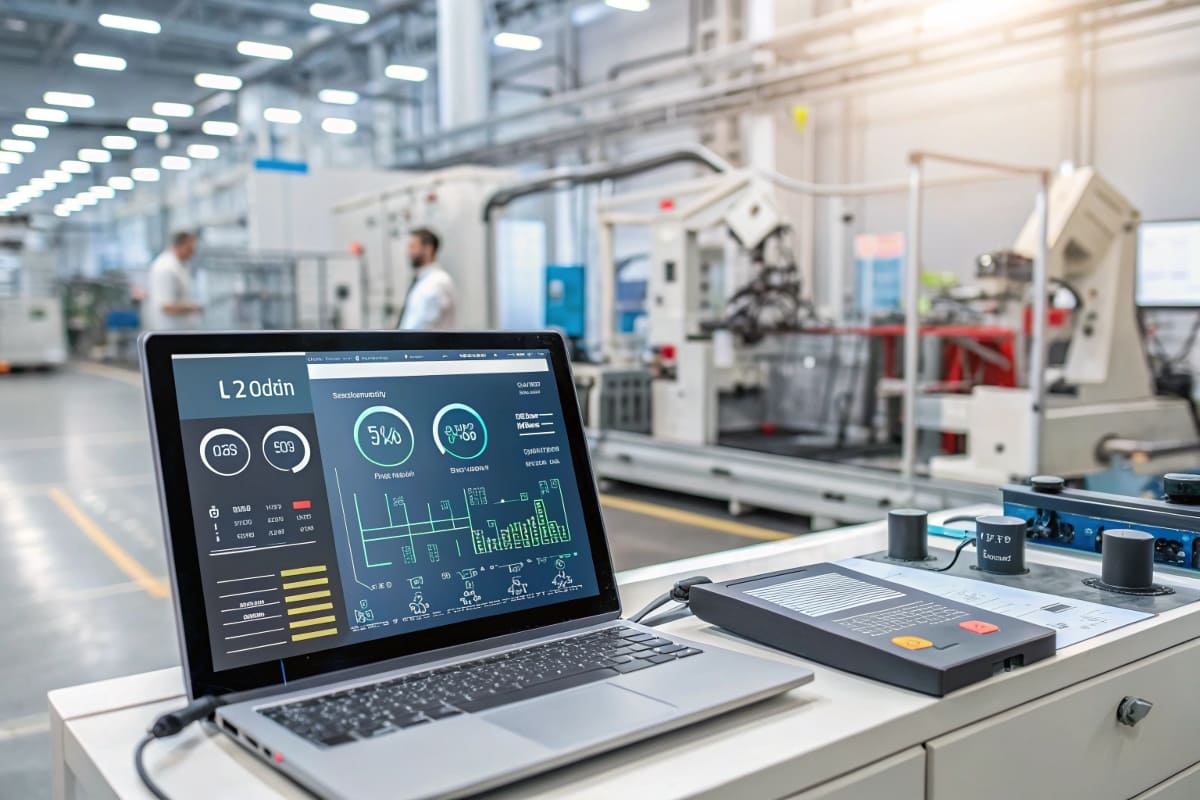
The concept of a "smart factory" used to sound like science fiction, but the Internet of Things (IoT) is making it a reality in 2025. It’s all about data. Every modern machine, from a filler to a labeler to a case sealer, has sensors. IoT is the network that connects all these sensors and brings their data together. I helped a client implement a basic IoT system last year. Before, they only knew their output at the end of the day. Afterwards, they could see on a screen, in real-time, that their labeler was stopping for 30 seconds every 15 minutes. They fixed the issue and increased their daily output by 10% overnight. That’s the power of visibility.
Building the Smart Packaging Line
An IoT implementation creates a transparent and responsive production environment. It turns your packaging line from a series of disconnected steps into a single, intelligent organism.
- Predictive Maintenance: Instead of waiting for a machine to break down, IoT sensors monitor vibrations, temperature, and performance. The system can send an alert that "Motor 3 on the cartoner is vibrating outside of normal parameters" weeks before it fails, allowing you to schedule maintenance during planned downtime.
- Overall Equipment Effectiveness (OEE): IoT provides the hard data you need to measure your true OEE. It automatically tracks availability (uptime), performance (speed), and quality (defect rate), showing you exactly where your biggest losses are.
- Automated Adjustments: In advanced systems, machines can adjust themselves. If a vision system detects that labels are being applied slightly crooked, it can send a signal to the labeler to self-correct its alignment without human intervention.
| IoT Feature | Function | Main Benefit |
|---|---|---|
| Real-Time Dashboards | Displays live performance data from every machine on the line. | Enables immediate identification and resolution of bottlenecks. |
| Predictive Maintenance Alerts | Analyzes sensor data to predict machine failures before they happen. | Dramatically reduces unplanned downtime and maintenance costs. |
| Energy Monitoring | Tracks power consumption of individual machines. | Identifies opportunities to reduce energy costs and improve sustainability. |
Conclusion
In 2025, packaging automation is about creating intelligent, flexible, and connected systems. Embracing AI, cobots, and IoT will give you the competitive edge to thrive in a demanding market.
Explore how AI-powered quality control can enhance accuracy and reduce errors in your packaging process. ↩
Learn how collaborative robots can make your packaging line more efficient and adaptable. ↩
Discover how integrated IoT systems can transform your operations with real-time data and insights. ↩
Understand the importance of flexibility in adapting to changing market demands in packaging. ↩
Learn about the common causes of recalls and how to implement solutions to avoid them. ↩
Find out how modern machine vision systems can revolutionize quality control in packaging. ↩
Discover how innovative packaging solutions can help extend the shelf life of your products. ↩
Understand how predictive maintenance can prevent downtime and save costs in manufacturing. ↩