
Luxury Sustainable Packaging: Can Eco Values Match Premium Feel?
Your luxury brand wants to be sustainable. But you fear eco-friendly options look cheap, undermining the premium feel you have worked so hard to build.
Absolutely. Modern sustainable packaging1 matches luxury through premium materials2 like refined molded pulp3 and FSC-certified papers4, and sophisticated finishes like embossing. Today, conscious consumption is part of the premium experience, making sustainability a new form of luxury itself.

A few years ago, "sustainable" often meant rough, brown, and frankly, a bit cheap-looking. For a luxury brand, that was a non-starter. But the industry has changed dramatically. I've personally seen and sourced materials that are both 100% recyclable and feel incredibly premium in your hand. The definition of luxury is evolving. Today's high-end consumer5 doesn't just want a beautiful product; they want to feel good about their purchase. As a designer like Jacky, mastering these new materials is the key to creating packaging that is both desirable and responsible.
What Materials Are Both Sustainable and Luxurious?
You are stuck with the idea that eco-friendly means flimsy recycled paper. This limits your design choices and makes you believe you must compromise on the premium tactile experience6.
High-end sustainable materials7 now include smooth-finish molded pulp, FSC-certified papers with a heavy-weight feel, and elegant mono-material glass. These options provide a premium tactile experience6 while being fully recyclable or compostable.
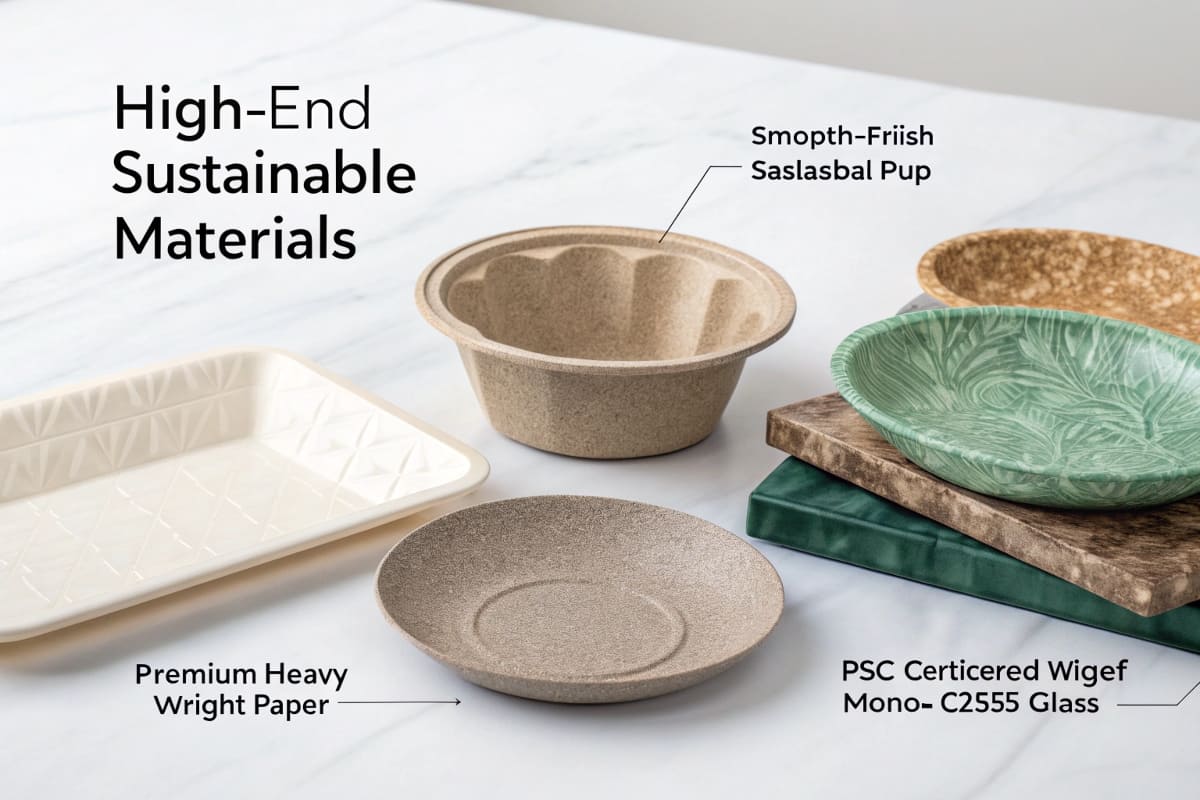
This is the area with the most exiting innovation. When I started my factory work, we used virgin paperboard for premium jobs and recycled materials for budget jobs. Now, the lines are completely blurred. I've sourced molded pulp that feels as smooth and dense as plastic. I've handled rigid boxes made from post-consumer waste8 that feel heavier and more substantial than their virgin counterparts. The trick is to stop thinking about "recycled" and start thinking about "engineered fibers." For a designer, this opens up a whole new world. You can achieve weight, texture, and rigidity without relying on traditional, less sustainable options. Glass, one of the oldest packaging materials, is also having a luxury comeback because it is infinitely recyclable and feels inherently premium.
Elevating Materials Beyond the Obvious
The key to luxury is in the specific choice and quality of the material. It's about moving beyond the cliché of "brown paper."
- Refined Molded Pulp: Forget egg cartons. Modern molded pulp can be formed into precise, smooth, and often brightly colored shapes. It can have the density of high-end paperboard and offers a unique, sculptural quality that feels very modern and luxurious.
- Forest Stewardship Council (FSC) Certified Paper: This is the gold standard for responsible paper. It ensures the paper comes from sustainably managed forests. More importantly, these papers are available in a huge range of weights, textures, and colors, allowing for a premium feel without environmental guilt.
- Mono-Material Design: Luxury is simplicity. Designing a package using only a single material, like a beautifully crafted glass jar with a glass lid, or a box made entirely of paper fiber with no plastic laminate, makes recycling effortless. This intelligent simplicity is a powerful statement of modern luxury.
| Material | Sustainable Credential | Luxury Feel |
|---|---|---|
| Refined Molded Pulp | Recycled & Compostable | Smooth, dense, sculptural, modern |
| FSC-Certified Paper | Responsibly Sourced | Heavy, textured, wide color range, classic luxury |
| Mono-Material Glass | Infinitely Recyclable | Heavy, cool to the touch, clear, timeless |
How Can Structural Design Enhance the Premium Eco-Friendly Feel?
Your sustainable box looks plain and uninspired. It protects the product, but it lacks the "wow" factor of a traditional luxury unboxing experience9, feeling more functional than special.
Strategic structural design10 creates a premium experience through a choreographed unboxing. Clever folding techniques, built-in paper pulp inserts, and unique opening mechanisms can deliver a memorable reveal using only sustainable materials.
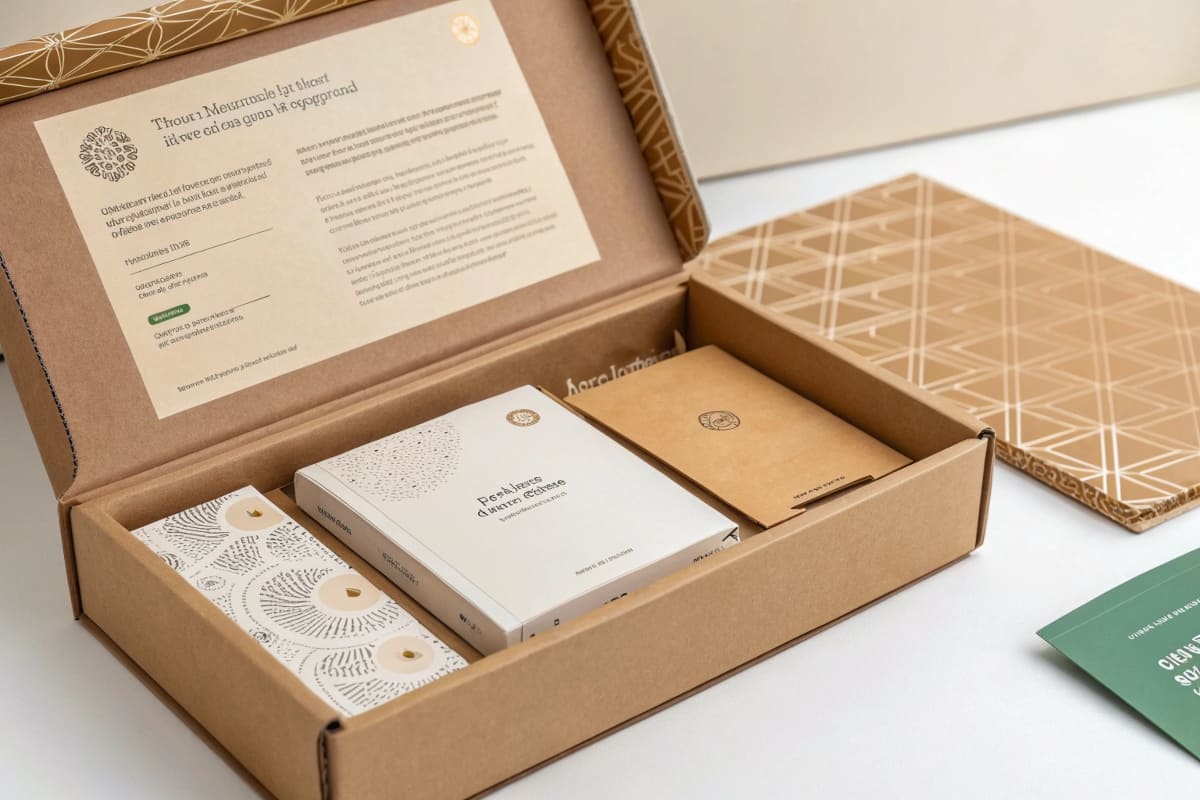
The most impressive luxury packaging11 I’ve seen recently didn’t rely on magnets, foam, or plastic laminates. It relied on pure engineering. I worked with a cosmetics client who wanted to eliminate all plastic from their packaging. Their designer created a brilliant rigid box that used a series of folded paper locks and a friction-fit closure. The box opened with a satisfying, slow reveal. The internal insert was a single piece of die-cut card that held the bottle perfectly. It felt incredibly clever and high-end, and the entire package could be dropped into a single recycling bin. As a designer like Jacky, your knowledge of structural engineering is your most powerful tool. It allows you to create suspense and delight with nothing more than folded paper.
Building Luxury with Folds and Cuts
The unboxing experience is a journey. You can guide this journey with clever, sustainable structural choices instead of multi-material excess.
- Friction-Fit Closures: Instead of plastic or metal magnets, design a box with a "neck and shoulder" structure. The friction between the top and bottom pieces creates a slow, controlled opening that signals quality.
- The "Origami" Unboxing: Design packaging from a single piece of paperboard that unfolds in an interesting and unexpected way. This creates a memorable and interactive experience for the customer, turning the package itself into a point of fascination.
- Integrated Inserts: Rather than using a separate insert made of a different material, design the insert as part of the box's structure. Clever die-cuts can be folded up from the base of the box to create a secure cradle for the product. This is minimalist, intelligent, and sustainable.
Do Eco-Friendly Finishes Compromise a Luxury Look?
You want to add a logo and text to your sustainable box. But you believe that premium finishes like shiny foils and spot UV coatings are bad for the environment.
Not at all. You can achieve a stunning luxury look with eco-friendly finishes12. Options like embossing/debossing, vegetable-based inks13, and new compostable hot foils provide beautiful tactile and visual effects without compromising recyclability.
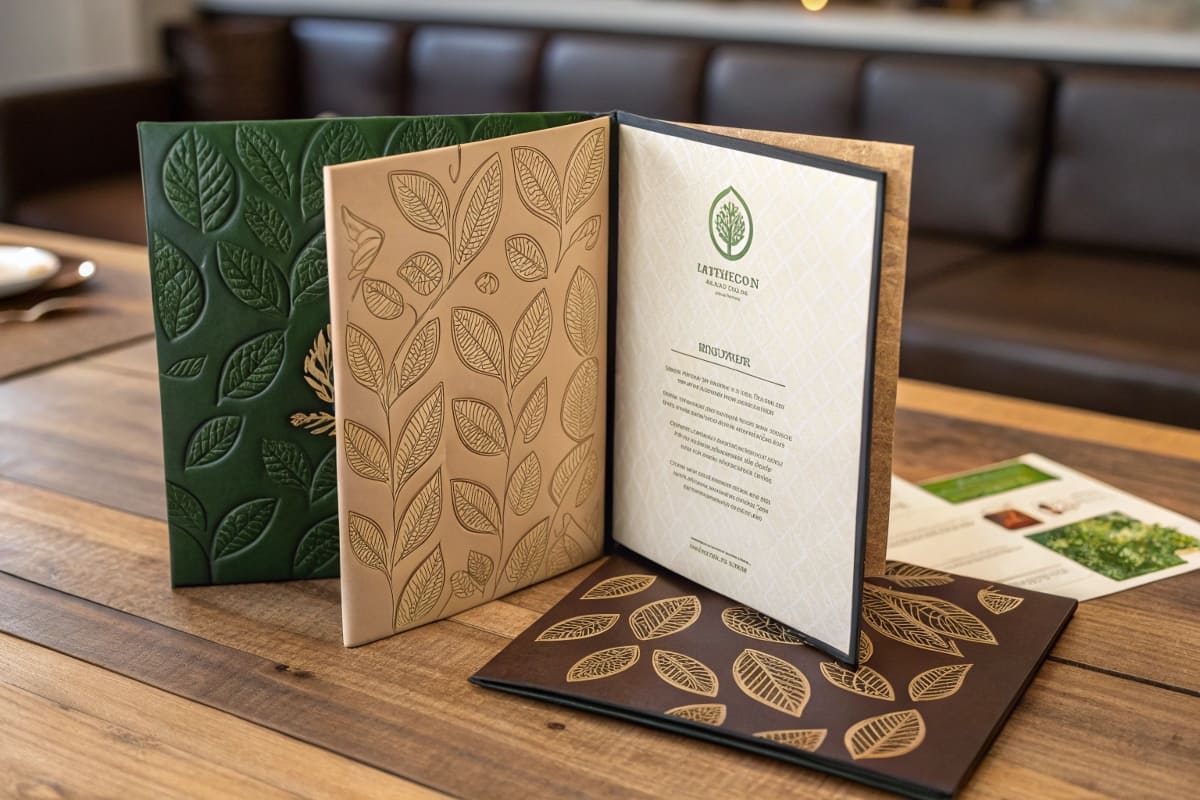
For a long time, the shiniest and most luxurious-looking finishes were the worst offenders for the environment. Traditional metallic foils contained plastics that made paper non-recyclable. But this has changed. I now source foils that are certified compostable, leaving no residue behind. Better yet, the most timeless and truly luxurious finish requires no additives at all: embossing and debossing14. A deep, crisp impression on a beautiful, heavy paper stock speaks volumes. It’s subtle, confident, and tactile. It says “quality” without shouting. For a designer, moving from additive finishes (like inks and foils) to subtractive or textural finishes (like embossing) is a mark of sophistication and environmental awareness.
A Guide to Sustainable Embellishments
Adding detail and texture is crucial for a luxury feel. Here are methods that align with an eco-conscious ethos.
- Embossing & Debossing: This technique uses pressure to create a raised (emboss) or indented (deboss) image in the paper. It adds texture and shadow, looks incredibly high-end, and has zero impact on the paper's recyclability.
- Vegetable & Soy-Based Inks: Traditional petroleum-based inks can release volatile organic compounds (VOCs). Vegetable- and soy-based inks are made from renewable resources and are much better for the environment, while still offering vibrant and consistent color.
- Sustainable Foils: If you absolutely need that metallic shine, look for certified compostable or recyclable foils. These are newer to the market but are becoming more widely available. They are designed to separate from the paper pulp during the recycling process.
| Finishing Technique | Environmental Impact | Luxury Appeal |
|---|---|---|
| Emboss/Deboss | Zero. No added materials. | High. Tactile, subtle, sophisticated, timeless. |
| Vegetable Inks | Low. Renewable source, low VOCs. | High. Vibrant colors, no compromise on quality. |
| Compostable Foil | Low. Breaks down in industrial composting. | High. Provides metallic shine without the guilt. |
Conclusion
Luxury and sustainability are no longer in conflict. Through premium eco-materials, clever structural design, and responsible finishes, you can create packaging that feels exceptional and respects the planet.
Explore how sustainable packaging can enhance your brand's image and appeal to eco-conscious consumers. ↩
Discover high-quality materials that can elevate your packaging while being eco-friendly. ↩
Find out how molded pulp can provide a premium feel while being environmentally friendly. ↩
Learn about the significance of FSC certification in ensuring sustainable paper sourcing. ↩
Learn about the expectations of luxury consumers regarding sustainability in packaging. ↩
Discover ways to enhance the tactile feel of your packaging for luxury appeal. ↩
Stay updated on innovative materials that combine sustainability with luxury. ↩
Learn about the benefits of using post-consumer waste in creating sustainable packaging. ↩
Explore how to create memorable unboxing moments that delight customers. ↩
Discover how thoughtful design can enhance the unboxing experience and brand perception. ↩
Stay informed about the latest trends shaping the luxury packaging landscape. ↩
Explore various finishes that maintain luxury aesthetics while being sustainable. ↩
Learn how vegetable-based inks can reduce environmental impact while providing vibrant colors. ↩
See how these techniques can add a tactile luxury feel to your packaging. ↩