
AI-Driven Packaging Quality Control: Can It Improve Efficiency?
You're constantly worried about quality control. A single mistake in printing or cutting on a large run can lead to massive waste and angry clients, all because a human inspector got tired.
Yes, AI-driven quality control1 dramatically improves efficiency by using high-speed cameras2 and machine learning3 to inspect every single package on the line in real-time. It catches errors far faster and more accurately than the human eye, reducing waste and ensuring consistency.
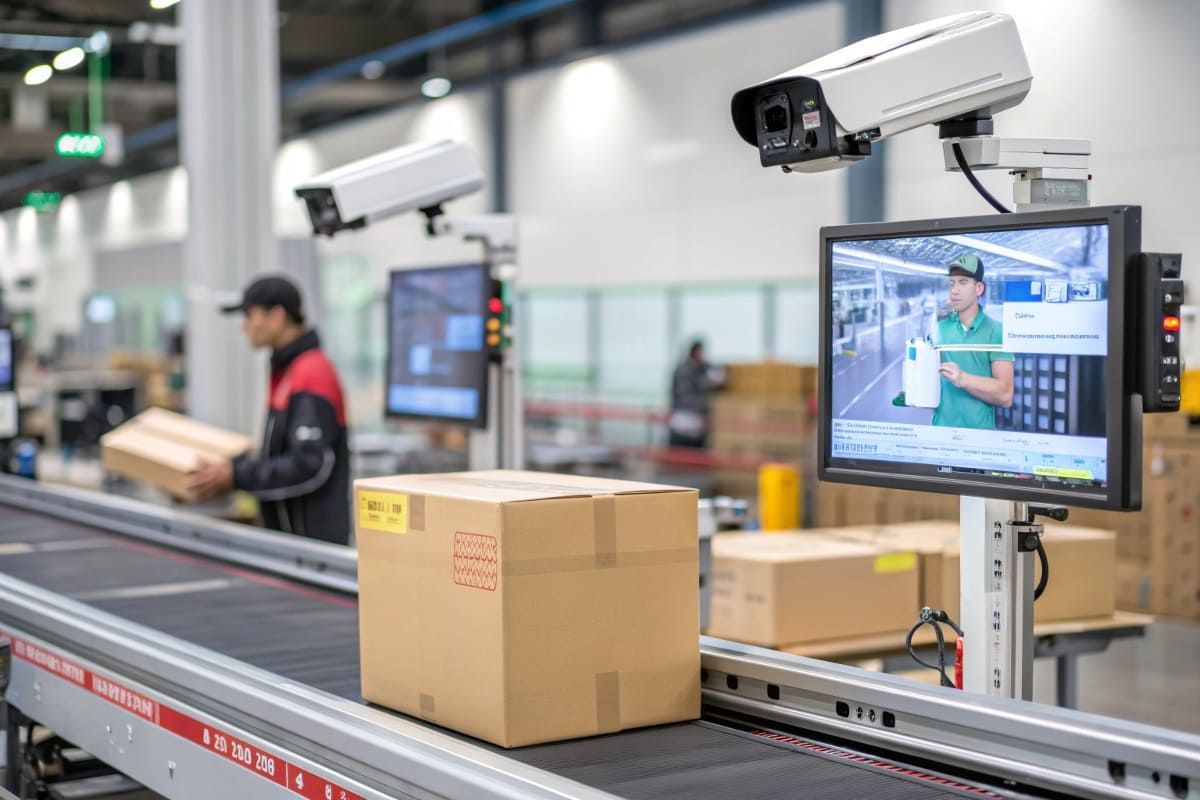
When I worked in a printing factory, I spent hours standing at the end of a press line, pulling sheets and looking for defects. We were supposed to check one sheet every few minutes. The noise was deafening, and your eyes would glaze over. We'd inevitably miss things—a tiny color shift, a small spot, a slight misregistration. Sometimes, we wouldn't notice a recurring error until thousands of sheets were already printed. That's thousands of dollars of waste. AI systems don't get tired or distracted. They check every single item with perfect focus, and that practical reality is changing the game for packaging quality.
How Does an AI System "See" Packaging Defects?
You understand how a person spots a mistake, but it's hard to visualize how a machine does it. The technology feels abstract, and you're unsure if you can trust a computer to do a person's job.
AI vision systems4 use high-resolution cameras to capture thousands of images of packages on the production line. The software compares each image against a pre-approved "golden standard5" or master reference file, instantly flagging any deviation in color, print, or structure.
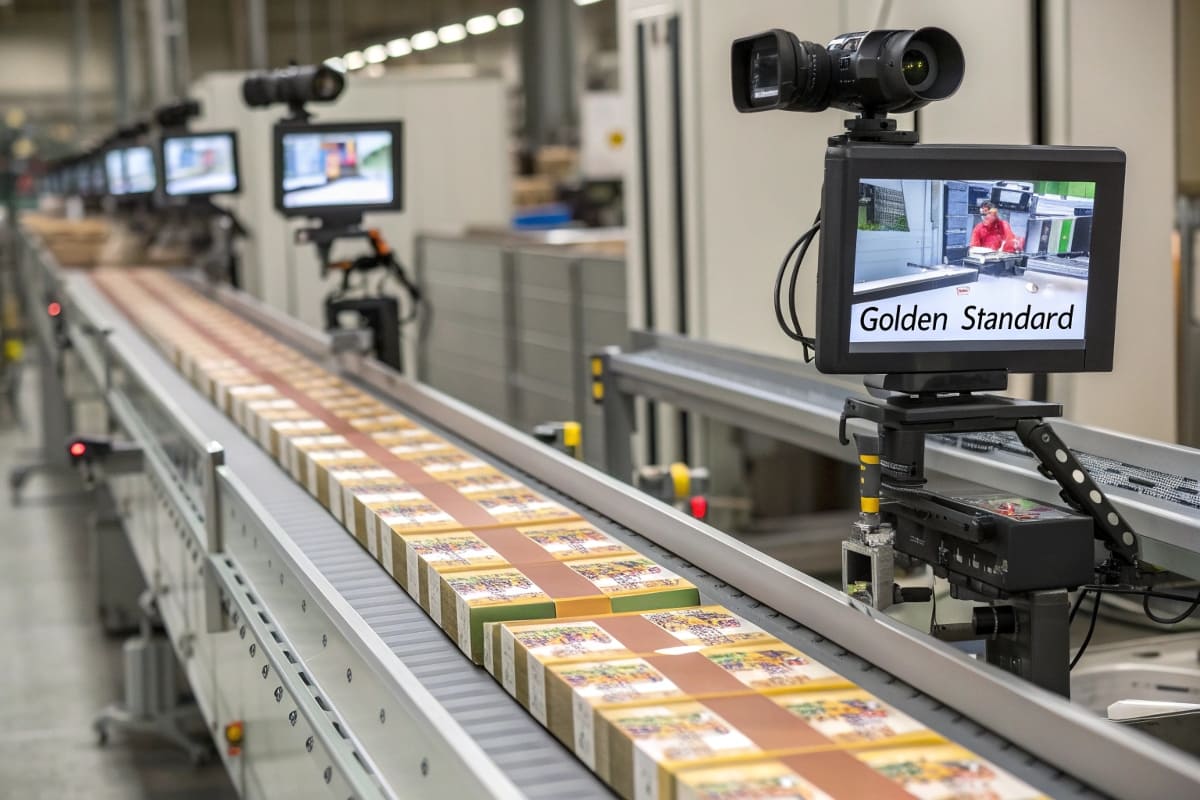
Think of it like a superhuman playing a "spot the difference" game a million times faster than you can blink. Before a production run, you show the AI what a perfect package looks like. This becomes its "golden template." Then, as the packages fly by on the conveyor belt, a high-speed camera snaps a picture of each one. The AI software overlays this new picture with the golden template and looks for any mismatches. It’s not just looking for big errors; it can detect a color shift of less than 1%, a scratch that's fractions of a millimeter wide, or a tiny glue smear. If it finds a mismatch, it can trigger an alarm or even activate a pneumatic arm to kick the defective item6 off the line automatically.
Manual vs. AI-Powered Inspection
The differences in capability and reliability are stark. For a designer like Jacky, this means your exact design specifications are adhered to with a precision that was previously impossible.
| Feature | Manual Inspection (Human) | AI-Powered Inspection (Machine) |
|---|---|---|
| Speed | Slow; spot-checks a fraction of the total run. | Extremely fast; inspects 100% of products in real-time. |
| Accuracy | Prone to fatigue, subjectivity, and human error. | Highly accurate and objective; detects microscopic flaws. |
| Consistency | Varies by inspector, time of day, and mood. | Perfectly consistent, 24/7. |
| Data Collection | Manual logs; often incomplete and hard to analyze. | Automatic; gathers detailed data on defect types and rates. |
| Cost | High recurring labor costs. | High initial investment, but low long-term running costs. |
What Kinds of Defects Can AI Reliably Detect?
You can see how AI might spot a huge printing error, but you're skeptical about its ability to catch the subtle but critical flaws. What are its actual capabilities and limitations in a real-world factory setting?
Modern AI systems can reliably detect a wide range of defects, including printing errors7 (color variations, spots, streaks), finishing issues (foil misregistration, scratches), and structural flaws8 (incorrect cuts, creases, and glue application errors).
<sup id=](https://whatapackaging.com/wp-content/uploads/2025/10/provide-an-illustration-for-the-following-text-mo.jpg) 9: a smudged logo, a misaligned foil stamp, and an incorrectly folded box corner" title="Examples of Packaging Defects Detected by AI" />
9: a smudged logo, a misaligned foil stamp, and an incorrectly folded box corner" title="Examples of Packaging Defects Detected by AI" />
The scope is much wider than most people think. It's not just about one parameter; it's about checking dozens at once. I partnered with a luxury goods client who was incredibly particular about the crispness of their embossed logo. A little bit of fiber cracking at the edge of the emboss was unacceptable. Human inspectors struggled with this; it was subjective. We implemented an AI system trained specifically to analyze the texture and edge quality of that embossed logo. The system learned to differentiate between a "perfect" crisp edge and a "failed" cracked edge with 99.9% accuracy. It can be trained to look for anything you can visually define as a rule. This includes verifying that barcodes are readable, checking for correct text, and ensuring die-cuts are perfectly aligned.
The AI Defect-Detection Checklist
AI can be trained to look for a comprehensive list of flaws across the entire production process.
- For Printing:
- Color Consistency: Is the Pantone color correct across the entire run?
- Defects: Are there hickeys, spots, streaks, or ghosting?
- Registration: Are all color plates perfectly aligned?
- For Finishing:
- Foil & Embossing: Is the foil stamp fully applied? Is the emboss aligned with the print?
- Lamination & Varnish: Are there any bubbles, wrinkles, or scratches?
- For Converting (Cutting & Gluing):
- Die-Cut Accuracy: Are the cuts and creases in the correct position?
- Gluing: Is the glue applied in the right spot and in the right amount? Is the box folded squarely?
Is Implementing AI Too Expensive for a Mid-Sized Company?
You work for a mid-sized company, not a giant corporation. You assume this technology requires a seven-figure investment and a team of data scientists to run, making it completely out of reach.
While a full-scale integrated system can be a major investment, many suppliers now offer "AI-as-a-Service10" or modular solutions11. These can be added to existing production lines for a more manageable cost, providing a clear ROI12 in under two years.
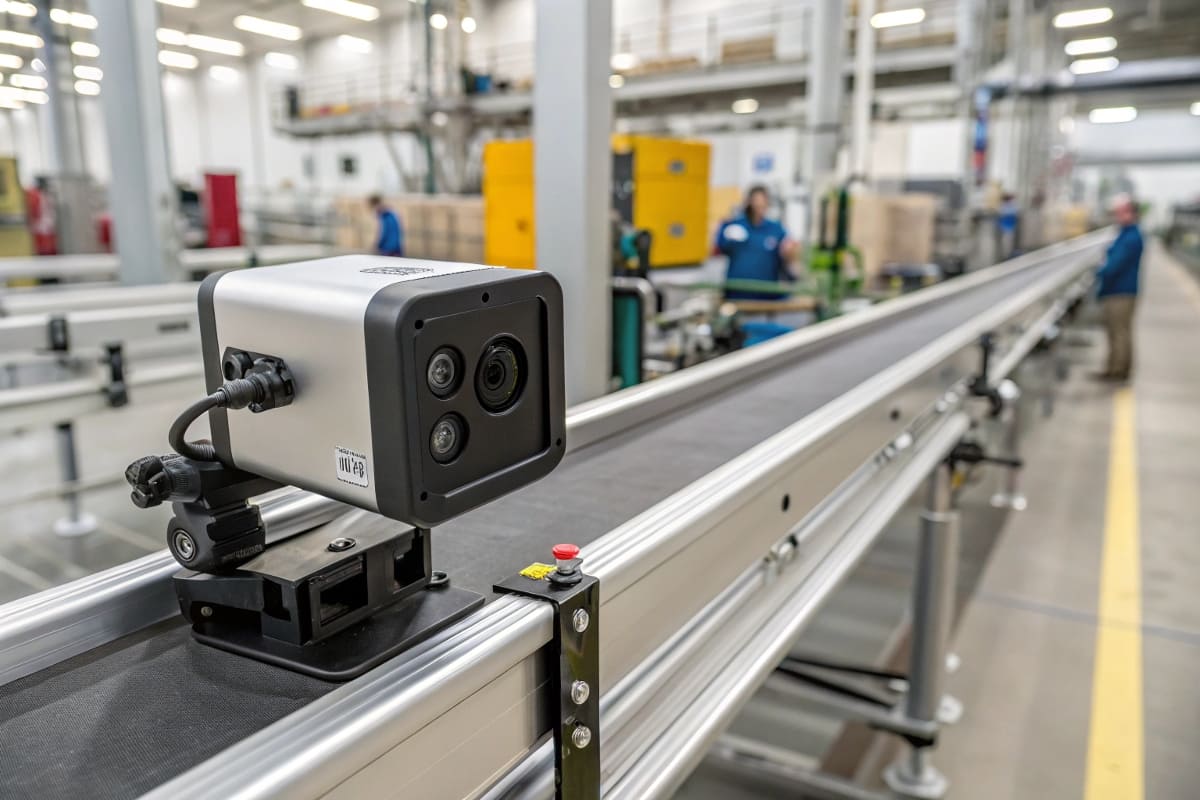
This is the key development that makes AI accessible now. You don't have to build a whole new factory. You can start with one critical point on your production line. For example, many of my clients begin by adding a single AI camera system to their folder-gluer machine. This is the last step before the boxes are packed, making it the most crucial point for a final check. The cost for a modular system like this has dropped significantly. When you calculate the ROI, it's not just about labor savings. The real savings come from drastically reducing material waste, avoiding costly re-runs, and eliminating the risk of shipping a defective batch to a major client. When you show that the system pays for itself by preventing just one major quality failure13, the investment becomes much easier to justify.
Paths to AI Implementation
You don't have to jump in all at once. There are scalable ways to adopt this technology.
- Start with a Pilot Project: Choose your biggest quality control headache—the one that costs you the most time and money. Work with a vendor to implement a single-point AI solution to solve that one problem. Measure the results and build the case for further expansion.
- Leverage Vendor Expertise: You don't need to hire a data scientist. Modern AI vision system vendors have user-friendly software. Their experts will help you "train" the system during setup. For a designer like Jacky, you provide the perfect digital proofs and physical samples, and the vendor's team configures the AI to match them.
- Focus on ROI, Not Just Cost: Frame the discussion around the cost of not having AI. Calculate the average annual cost of waste, returns, and client discounts due to quality issues. This number is often shockingly high and makes the upfront cost of an AI system seem very reasonable in comparison.
Conclusion
AI-driven QC is no longer science fiction; it is a practical tool. It boosts efficiency and ensures a level of quality that protects your brand, saves money, and keeps clients happy.
Explore how AI-driven quality control can enhance efficiency and reduce waste in manufacturing processes. ↩
Learn about the role of high-speed cameras in enhancing accuracy and speed in quality control. ↩
Discover how machine learning algorithms are revolutionizing quality control in various industries. ↩
Explore the technology behind AI vision systems and their role in enhancing quality control processes. ↩
Understand the concept of a golden standard and its importance in maintaining quality consistency. ↩
Explore the technology behind AI systems that can automatically identify and remove defective items. ↩
Learn about the various printing errors that AI can effectively identify and correct. ↩
Discover the capabilities of AI in identifying structural flaws that can affect product integrity. ↩
Discover the range of packaging defects that AI systems are capable of identifying and correcting. ↩
Explore how AI-as-a-Service models make advanced technology accessible for mid-sized businesses. ↩
Learn about modular AI solutions that can be integrated into existing production lines for cost-effective upgrades. ↩
Understand how to measure the return on investment when adopting AI technologies in quality control. ↩
Learn about the potential repercussions of quality failures and how AI can help prevent them. ↩